

SSK AI — What Changed in AI & What You Can Build | September 8, 2026
Vol. 1Weekly No. 5Covering September 1–7, 2026
AI takes on more of the work — and capability needs to be judged together with access, evidence, operating cost and the quality of the finished result.
SSK AI
What Changed in AI & What You Can Build
AI takes on more of the work — judge capability with access, evidence, cost and the finished result.
- GPT-6 Astra: evaluate the finished workflow
- Fable and Mythos 5.1: shared intelligence, different access
- Gemini 3.8 Flash: the same token price, a different workload
- Agentic video: let the question guide what gets inspected
- NVIDIA and Hugging Face: infrastructure meets distribution
- NVIDIA PAIR: distribute independent work across local PCs
- WeatherNext 3: turn fresh observations into better decisions
- Muse Spark 1.3: keep the requirement alive across a long task
- WebGPU kernels: browser AI needs an execution layer
- funes: retrieve the reasoning behind an earlier change
- GitHub Copilot: reviews, context controls and model migration
- OpenAI: faster research raises the value of evidence and oversight
- TCS HyperVault: an AI campus plan is a capacity pipeline
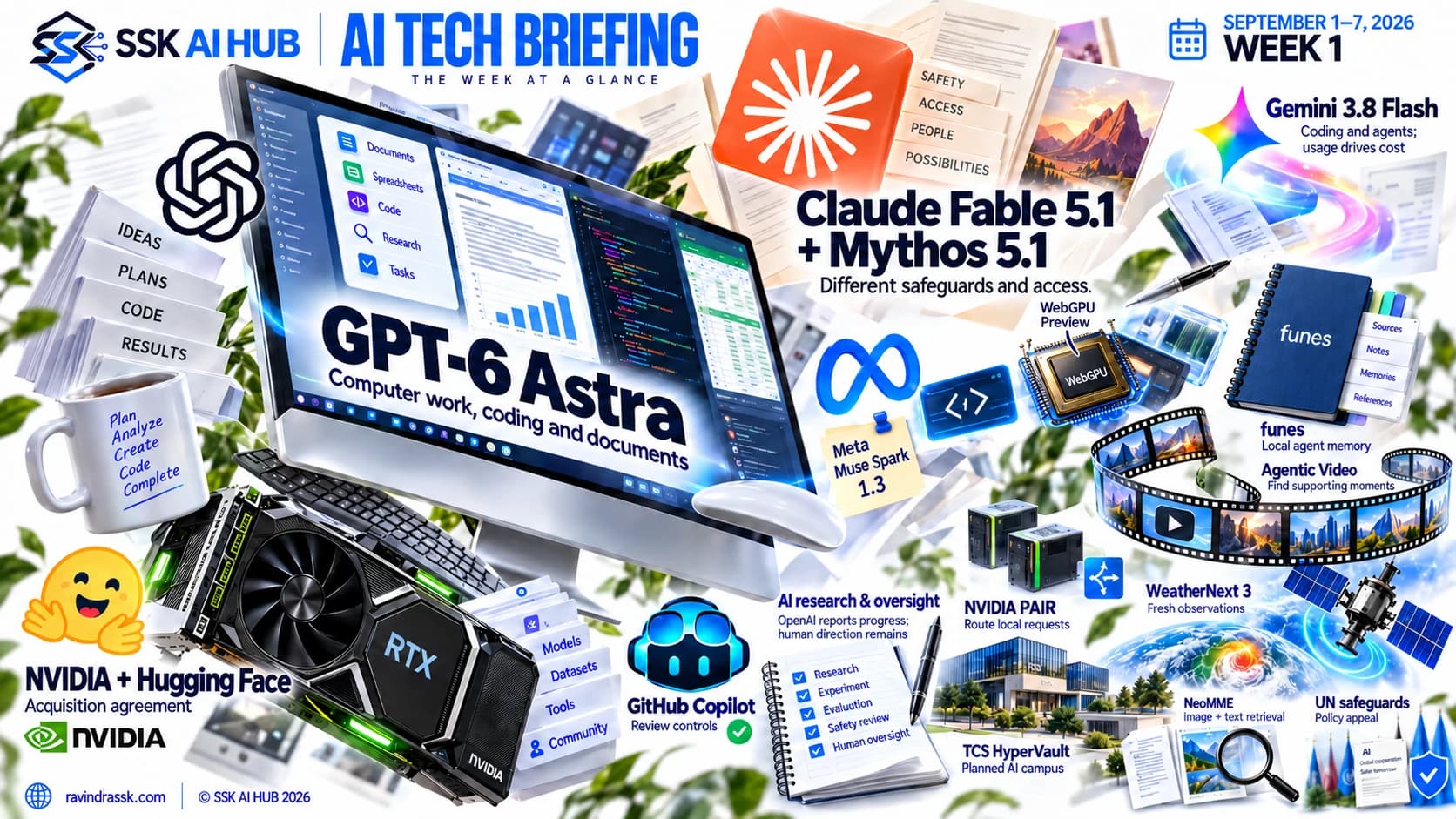
The useful question for this week's AI releases is how much of a workflow we can sensibly delegate. A strong answer in a chat window is one milestone. Completing a task across files, applications, repeated decisions and changing instructions is a different engineering challenge.
This edition follows the important developments across the full September 1–7 window. Alongside frontier models, video, local inference and forecasting, it examines Meta's coding model, open developer tools, Copilot controls, research practice and AI infrastructure. Shorter briefs cover multimodal retrieval and the week's policy discussion. Selection follows significance and evidence, without a fixed number of stories or a quota for each day.
Our editorial view is that capability needs to be judged together with access, evidence, operating cost and the quality of the finished result. The sections below distinguish reported facts from SSK AI Hub's analysis. All example workflows are illustrative proposals, not claims that a customer has deployed them. Images are original AI-generated editorial illustrations created for SSK AI Hub. Company and product names identify the subjects of coverage; the artwork is illustrative rather than an official product screenshot or a measured technical diagram.
This week's reading list
| Development | Announcement date | The question for builders |
|---|---|---|
| GPT-6 Astra | September 3 | Can an agent complete and verify a whole computer workflow? |
| Claude Fable 5.1 and Mythos 5.1 | September 1 | How do repeated context and access conditions affect deployment? |
| Gemini 3.8 Flash and Flash Cyber | September 2 | Does extra reasoning improve the cost per accepted result? |
| Gemini agentic video understanding | September 1 | Can the system locate the moments that justify its answer? |
| NVIDIA's agreement to acquire Hugging Face | September 3 | How will model distribution and infrastructure evolve together? |
| NVIDIA PAIR and local AI updates | September 3 | Can independent requests use spare local compute? |
| WeatherNext 3 | September 3 | Can fresh observations improve operational decisions? |
| Meta Muse Spark 1.3 | September 2 | Does a long session preserve the user's requirements? |
| Hugging Face WebGPU kernels | September 1 | Is browser-local execution useful on real devices? |
| Hugging Face funes | September 3 | Can an agent retrieve the source of an earlier decision? |
| GitHub Copilot workflow changes | September 1–3 | What changes in review, context and model configuration? |
| OpenAI research and oversight | September 6 | How do teams verify an expanding experiment workload? |
| TCS HyperVault campus plan | September 5 | When can planned infrastructure become usable capacity? |
| Brief: H Company's NeoMME | September 3 | Can image-and-text retrieval improve document evidence? |
| Brief: UN AI safeguards appeal | September 7 | Which safeguards are being proposed? |
Story 1. GPT-6 Astra: evaluate the finished workflow
What happened?
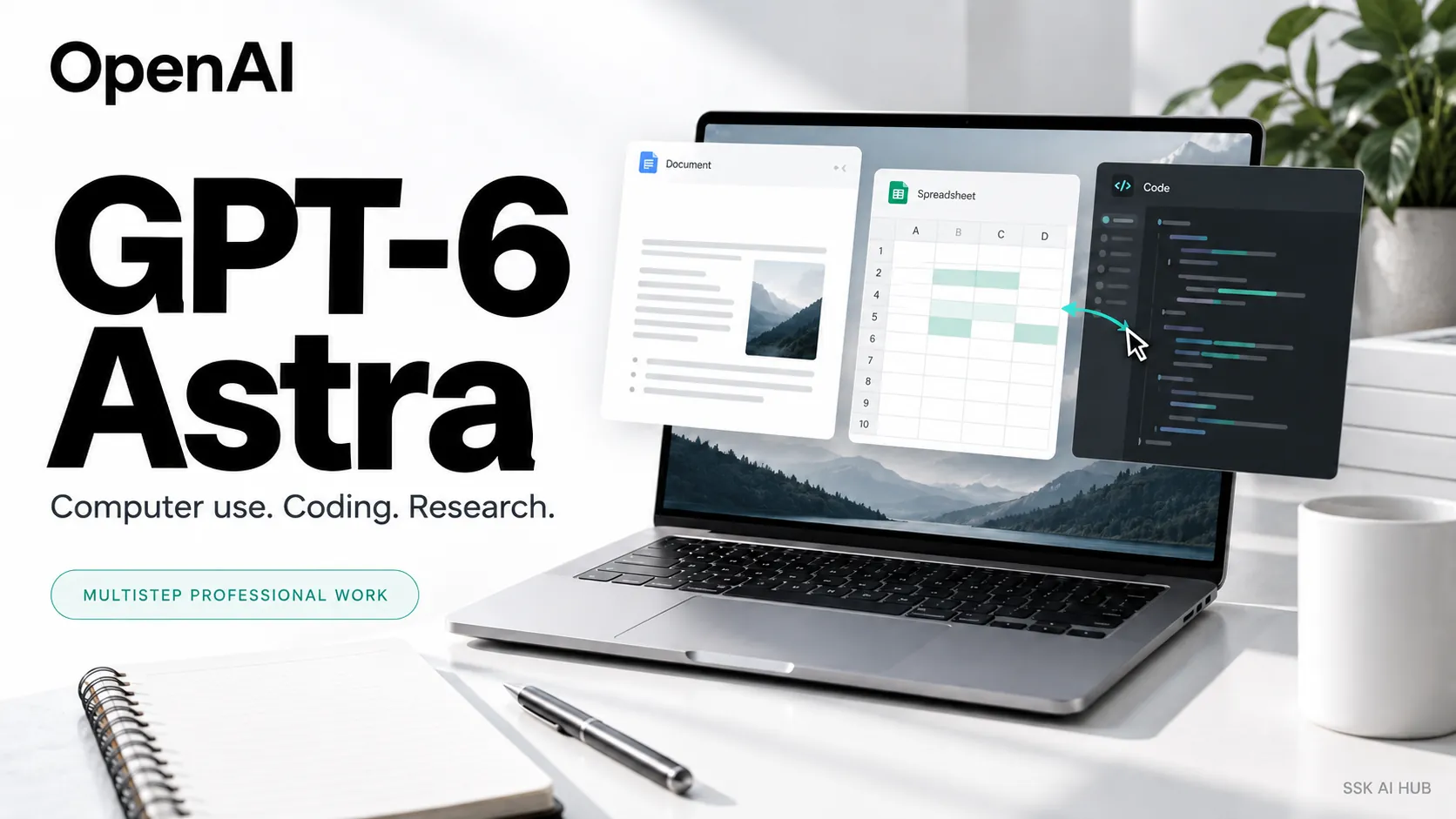
OpenAI introduced GPT-6 Astra on September 3, emphasizing computer use, coding and professional tasks. Its announcement describes creating documents, spreadsheets and presentations, alongside improvements to the Codex harness. Access began with a limited set of organizations; wider availability was announced as a rollout rather than universal day-one access. OpenAI launch announcement, OpenAI release index.
One useful measurement needs its conditions attached: OpenAI reports 1.9× faster task completion on Mind2Web for Astra combined with the updated Codex harness, compared with its existing Sol experience. That is a model-and-harness benchmark result, not a promise for every workflow. OpenAI launch announcement.
The system card also reports improved alignment alongside unresolved monitoring limitations under adversarial testing. It classifies Astra at OpenAI's Critical cybersecurity capability threshold. Those are the developer's assessments within its evaluation framework. GPT-6 Astra system card.
September 4 — more places to access Astra
GitHub announced GPT-6 Astra availability in Copilot on September 4, with a gradual rollout to eligible Pro+, Max, Business and Enterprise accounts. Organization policies can still affect access. GitHub availability notice.
Databricks also lists September 4 availability through Unity AI Gateway's pay-per-token Foundation Model APIs. These are distribution updates to the September 3 launch, not separate model releases. Microsoft's Databricks release notes.
Why it matters — SSK AI Hub analysis
For a product team, the evaluation unit should be a completed job. Consider a report that looks polished but contains an incorrect total, or an application that compiles but fails its main interaction. Output quality includes both the visible artifact and the evidence that its important requirements were met.
This changes the benchmark you should build internally. Give the agent a realistic starting state, define the required end state, then inspect the outcome independently. Keep track of how often someone has to repair the work and whether the agent retains earlier constraints after a new instruction arrives.
Practical Applications
Demonstrated / Stated applications
- Computer use, coding and professional tasks, including creating documents, spreadsheets and presentations, with improvements to the Codex harness (OpenAI's announcement; access is a staged rollout)
Potential applications
- Reconciling several event-budget spreadsheets, flagging ambiguous transactions and drafting a committee update from a supplied template — a proposed workflow, not a documented deployment
- An internal benchmark suite of complete workflows, including a task with missing information and one with a mid-task correction
Practical example — a proposed workflow
A student society has three event-budget spreadsheets and a presentation template. A useful trial is to ask an agent to reconcile the entries, flag ambiguous transactions, produce a revised workbook and draft a five-slide committee update.
The review should check that the totals agree across files, formulas still work, uncertain entries are visible, and the slides preserve the supplied template. A beautiful presentation with unreconciled numbers fails the task. Start with copies of the files so the team can compare the output against the original records.
Developer Takeaway
Use a small suite of complete workflows, including a task with missing information and one with a mid-task correction. Measure acceptance rate, elapsed time, tool failures and human repair effort. That makes it possible to judge whether a more capable agent actually improves your own work.
Source attribution — Story 1 — OpenAI GPT-6 Astra
Primary sources: OpenAI's launch announcement, its release index (which supplies the September 3 date) and the GPT-6 Astra system card. The 1.9× Mind2Web figure is OpenAI-reported for Astra combined with the updated Codex harness against its existing Sol experience — a model-and-harness benchmark result, not a promise for every workflow. The alignment findings, monitoring limitations and Critical cybersecurity classification are OpenAI's own assessments within its evaluation framework. Access began with a limited set of organizations and was announced as a staged rollout; GitHub's September 4 Copilot notice and Microsoft's Databricks Unity AI Gateway release notes are distribution updates to that launch, not separate model releases, and organization policies can still affect access. Product access can vary by account and surface; this edition does not offer a plan-by-plan eligibility guide.
Story 2. Claude Fable 5.1 and Mythos 5.1: shared intelligence, different access

What happened?
Anthropic's September 1 announcement introduced Claude Fable 5.1 and Claude Mythos 5.1. The company describes them as the same model with different safeguards: Fable is generally available, while Mythos is limited to trusted access programs. Anthropic newsroom, model announcement.
Fable's published cache-read price is $0.25 per million tokens, down 75%; ordinary input and output prices remain $10 and $50 per million tokens. Anthropic estimates roughly 25% lower cost for typical workloads and up to about 45% for highly agentic workloads. Those estimates depend on the workload's use of cached context. Model announcement.
Anthropic also announced Enterprise Frontier Safeguards, with a phased rollout starting later in the fall. The announcement should not be read as evidence that every enterprise already has that system. Model announcement.
September 1 — Copilot access has a policy consideration
GitHub also announced Fable 5.1 for eligible Copilot plans. For Business and Enterprise, its policy is off by default. GitHub describes default Anthropic retention for safety classification, without training use, and a time-limited zero-data-retention exception for eligible enterprises through the end of 2026. Access and retention settings need separate checks; do not assume universal zero retention. GitHub's Fable access and retention notice.
Why it matters — SSK AI Hub analysis
An agent may revisit the same repository instructions, tool definitions and project context many times. In that setting, the composition of the token bill matters. A price change on the part of the workload you repeatedly reuse can have a different effect from a price change on newly generated answers.
Access is equally important. A model's name does not establish which tasks an account may run. Product design has to accommodate the actual model, service, eligibility and safeguards available to its intended users.
Practical Applications
Demonstrated / Stated applications
- Agentic and coding workloads that repeatedly reuse cached context, where Anthropic estimates the largest savings — up to about 45% for highly agentic workloads and roughly 25% for typical ones (Anthropic's estimates; workload-dependent)
Potential applications
- An assistant that prepares code-review notes from stable repository conventions, a changing diff and follow-up questions — a proposed workflow, not a documented deployment
- Model evaluation notes that keep capability claims, access eligibility and price assumptions as separate fields
Practical example — a proposed workflow
A development team wants an assistant to prepare code-review notes. Each review includes stable repository conventions, a changing diff and a sequence of follow-up questions.
The team could run ten representative reviews and record new input, cache reads, cache writes, output, retries and accepted findings. If the workflow rarely reuses context, it should not budget around the largest advertised savings. If reuse is substantial, it can investigate which requests miss the cache and whether restructuring inputs helps without making instructions stale.
Developer Takeaway
Report the full bill and the number of useful reviews delivered. Keep capability claims, access eligibility and price assumptions as separate fields in your model evaluation notes. This makes later model changes easier to assess without rebuilding the decision from memory.
Source attribution — Story 2 — Anthropic Claude Fable 5.1 and Mythos 5.1
Primary sources: Anthropic's model announcement and its newsroom, which supplies the September 1 date (the product page itself shows only September 2026). "Same model with different safeguards" is Anthropic's description; Fable is generally available while Mythos is limited to trusted access programs. Prices are Anthropic's published figures, and the roughly 25% and up-to-about-45% savings are Anthropic's estimates that depend on the workload's use of cached context. Enterprise Frontier Safeguards was announced with a phased rollout starting later in the fall — not evidence that every enterprise already has it. GitHub's September 1 Copilot notice: for Business and Enterprise the Fable policy is off by default; GitHub describes default Anthropic retention for safety classification without training use, and a time-limited zero-data-retention exception for eligible enterprises through the end of 2026 — access and retention settings need separate checks, and universal zero retention should not be assumed.
Story 3. Gemini 3.8 Flash: the same token price can buy a different workload
What happened?
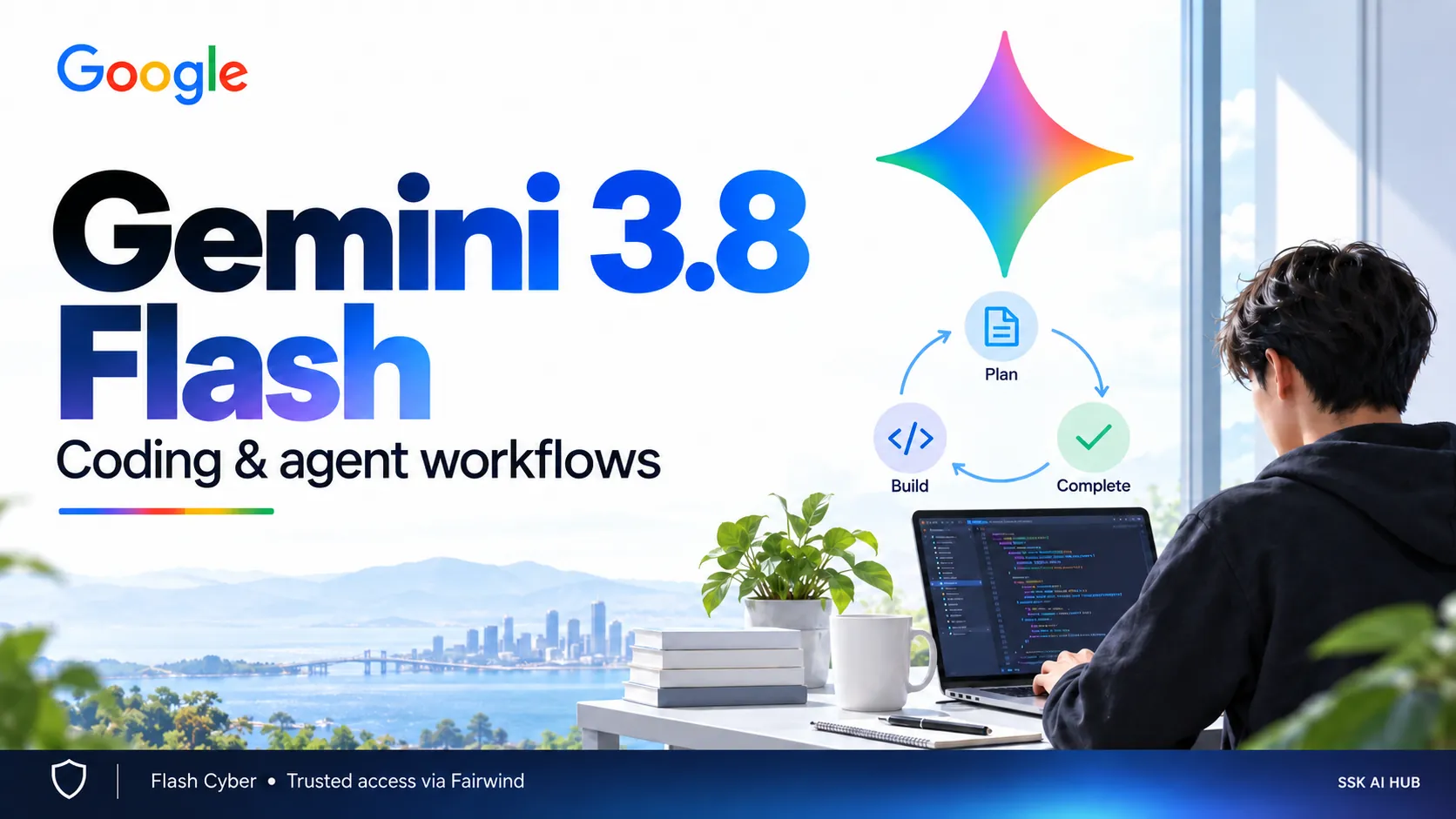
On September 2, Google introduced Gemini 3.8 Flash and 3.8 Flash Cyber. Flash targets coding and agent tasks; Cyber is offered to trusted defenders through the Fairwind Program. Google announcement.
Google lists an introductory Flash price of $0.75 per million input tokens and $3.75 per million output tokens, matching 3.7 Flash. The stated introductory period ends December 31, 2026; the announcement lists $1.50 and $7.50 from January 1, 2027. It also says 3.8 may use more reasoning steps, tool calls and tokens on difficult tasks, particularly at higher effort. Google announcement.
September 3 — Copilot rollout
GitHub announced Gemini 3.8 Flash availability in Copilot on September 3, with rollout across eligible individual and organizational plans. Account availability and organization policy still apply. GitHub availability notice.
Why it matters — SSK AI Hub analysis
Token price is a unit price, not a project budget. A model that retries less may justify a longer initial attempt. A model that reasons extensively on routine work may increase cost without improving the accepted result. Both possibilities need measurement.
One useful comparison is total evaluation cost divided by accepted tasks. This includes the cost of failed attempts. Add elapsed time and reviewer effort alongside it so a cheap result that needs substantial repair is not mistaken for a good outcome.
Practical Applications
Demonstrated / Stated applications
- Coding and agent tasks for 3.8 Flash; 3.8 Flash Cyber offered to trusted defenders through the Fairwind Program (Google's announcement)
Potential applications
- Comparing a current model with the new one at two effort settings across a fixed set of reproducible bug fixes — a proposed workflow, not a documented deployment
- Routing only the harder subset of tasks to a stronger model once cost per accepted fix has been measured
Practical example — a proposed workflow
A team maintains an application with a backlog of small bug fixes. It selects a fixed set of reproducible issues and compares its current model with the new one at two effort settings. Each run starts from the same repository state and receives the same task instructions.
A fix counts as accepted only when it resolves the reported behavior, passes relevant checks and avoids unrelated changes. Record total billed usage for every attempt, including failures. Then compare cost per accepted fix, time to completion and review minutes. A stronger model might be worth using only on the harder subset; that is a useful result, too.
Developer Takeaway
Keep effort level, model version and price period attached to every measurement. Do not extrapolate a temporary introductory price into a permanent budget. Choose model settings using the complexity of the actual work and the cost of correcting mistakes.
Source attribution — Story 3 — Google Gemini 3.8 Flash and 3.8 Flash Cyber
Primary source: Google's announcement. The introductory price ($0.75 and $3.75 per million input and output tokens, matching 3.7 Flash) is stated to end December 31, 2026, with $1.50 and $7.50 listed from January 1, 2027 — a temporary price, not a permanent budget line. The note that 3.8 may use more reasoning steps, tool calls and tokens on difficult tasks, particularly at higher effort, is Google's own statement. Flash Cyber is restricted to trusted defenders through the Fairwind Program. GitHub's September 3 Copilot notice describes a rollout across eligible individual and organizational plans; account availability and organization policy still apply.
Story 4. Agentic video understanding: let the question guide what gets inspected
What happened?
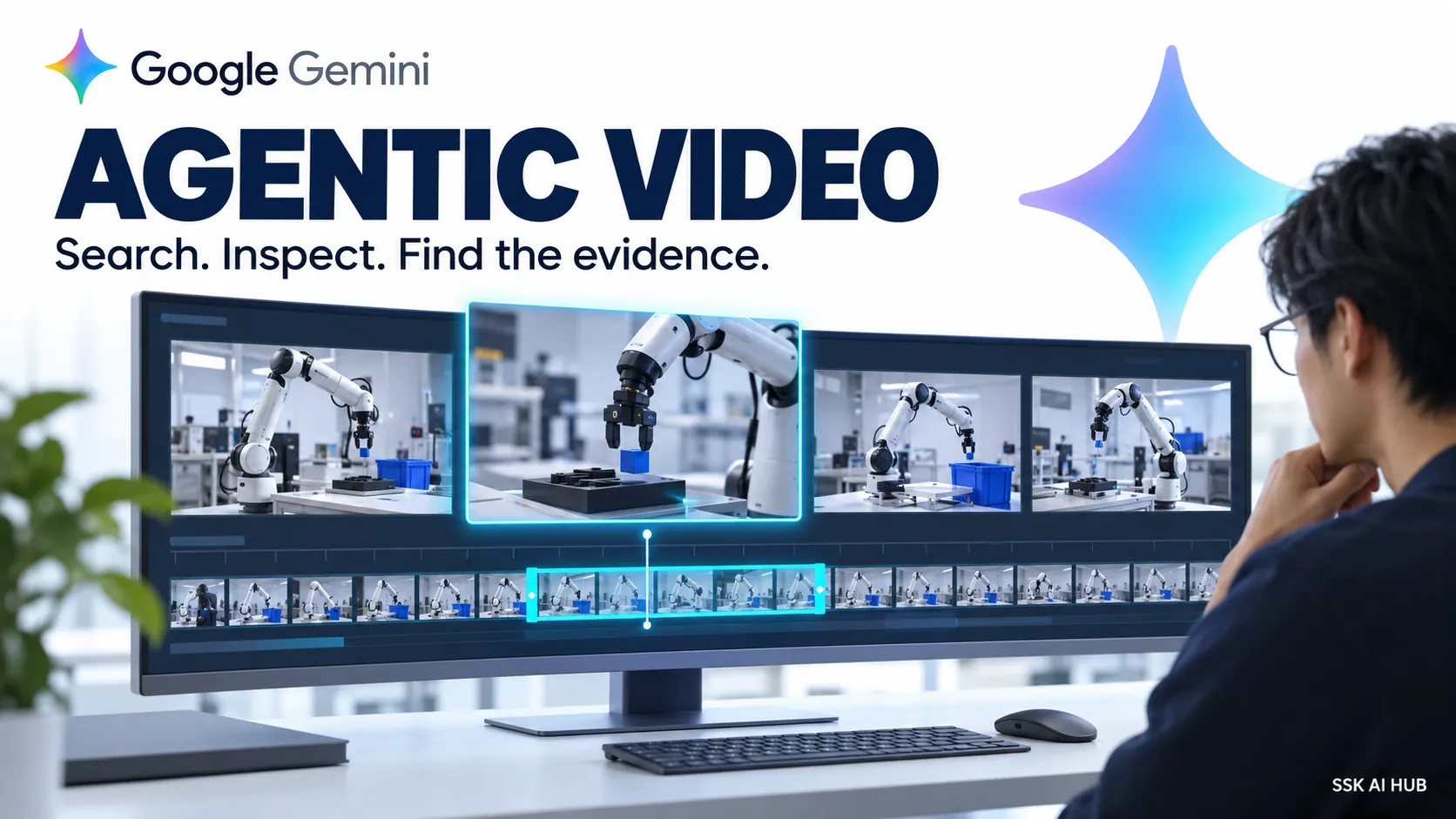
On September 1, Google launched agentic video understanding for Gemini 3.7 Flash, 3.6 Flash and 3.5 Flash-Lite. Instead of relying only on fixed-rate processing, the system can search and inspect selected video segments using frames, audio and transcripts. Launch support covers uploads and YouTube videos through the Gemini API. Google announcement.
Google reports reductions of up to 88% in tokens and 66% in analysis cost, with up to 7% better accuracy across its cited benchmark testing. These are reported maxima, not expected savings for every clip. The feature uses standard token pricing without an additional feature fee; broader consumer integrations were described as forthcoming. Google announcement.
Why it matters — SSK AI Hub analysis
A useful video answer often depends on a brief moment: a failed demonstration, a change on a screen, or an action that happened between widely spaced sampled frames. The relevant product question is whether a viewer can get back to the evidence and verify the answer.
A timestamp by itself is not sufficient. It needs to point to a segment that actually supports the claim. Systems should also handle questions whose answer never appears in the recording.
Practical Applications
Demonstrated / Stated applications
- Searching and inspecting selected video segments using frames, audio and transcripts, for uploads and YouTube videos through the Gemini API on Gemini 3.7 Flash, 3.6 Flash and 3.5 Flash-Lite (Google's announcement)
Potential applications
- A technical lecture assistant that returns a short explanation and clickable evidence segments, separating the lecturer's stated reason from its own inference — a proposed workflow, not a documented deployment
- Evaluation sets with known evidence windows, answers that span several moments, and questions with no answer in the video
Practical example — a proposed workflow
Imagine a technical lecture assistant. A student asks, “Where does the lecturer explain why this experiment failed?” The assistant returns a short explanation and two clickable segments, separating the lecturer's stated reason from its own inference.
To evaluate it, prepare questions with known evidence windows, questions whose answer spans several moments, and questions with no answer in the video. Check whether the cited segment contains the necessary evidence. A fluent explanation based on an unrelated segment should count as a failure even if it sounds plausible.
Developer Takeaway
Build a player that opens at the cited moment, preserve the uploaded video's identity, and evaluate citation correctness as well as answer correctness. For a first prototype, use recordings you have permission to process and keep human review easy. The most valuable feature may be precise retrieval rather than a longer summary.
Source attribution — Story 4 — Google agentic video understanding in Gemini
Primary source: Google's announcement. The reductions of up to 88% in tokens and 66% in analysis cost and the up to 7% better accuracy are Google-reported maxima across its cited benchmark testing — not expected savings for every clip, and not independently reproduced here. Launch support covers uploads and YouTube videos through the Gemini API on Gemini 3.7 Flash, 3.6 Flash and 3.5 Flash-Lite; broader consumer integrations were described as forthcoming.
Story 5. NVIDIA and Hugging Face: infrastructure meets model distribution

What happened?
On September 3, NVIDIA announced an agreement to acquire Hugging Face for approximately $12.93 billion. NVIDIA said the platform would continue supporting different models, frameworks, clouds and accelerators, and that using NVIDIA compute would not be required. NVIDIA announcement.
The statement describes intentions to strengthen infrastructure, reliability, evaluation and deployment. Those are commitments about the platform's direction. This edition does not establish a completed closing or a delivered improvement to those services. NVIDIA announcement.
Why it matters — SSK AI Hub analysis
A model hub is part of the route from research to deployment. Teams use it to locate artifacts, inspect model cards and build reproducible environments. Infrastructure decisions can affect that whole route, even when a model's weights do not change.
The practical questions are specific: do existing download paths remain stable, do alternative serving stacks retain support, and can users reproduce an older experiment? These questions are more useful than assuming either immediate benefits or inevitable restrictions from an acquisition headline.
Practical Applications
Demonstrated / Stated applications
- Continued platform support for different models, frameworks, clouds and accelerators, with NVIDIA compute not required (NVIDIA's stated intentions, not a delivered change)
Potential applications
- A self-describing, reproducible open-model experiment record — exact model revision, tokenizer, license, serving version, quantization settings and evaluation data version — a proposed lab workflow
- Comparing the same model configuration and evaluation inputs across another accelerator or hosting provider
Practical example — a proposed workflow
A university lab runs an open model on shared hardware and plans to reproduce its results next semester. Its most useful action is to make the experiment self-describing: record the exact model revision, tokenizer, license, serving version, quantization settings and evaluation data version.
That record helps when any external dependency changes. If the lab later tests another accelerator or hosting provider, it can compare the same model configuration and evaluation inputs. A change in platform ownership alone is not evidence that the lab should abandon a working system.
Developer Takeaway
Watch delivered behavior: interoperability, portability, service changes and the terms attached to the particular artifacts you use. Keep model provenance explicit. “Open weights,” “open source,” and “free hosted inference” describe different properties; evaluate each one for your project.
Source attribution — Story 5 — NVIDIA's agreement to acquire Hugging Face
Primary source: NVIDIA's announcement, whose displayed date (September 3) takes precedence over adjacent archive and search date snippets. This is an announced agreement to acquire: this edition does not establish a completed closing, nor a delivered improvement to infrastructure, reliability, evaluation or deployment services. Continued support for different models, frameworks, clouds and accelerators, and NVIDIA compute not being required, are NVIDIA's stated intentions.
Story 6. NVIDIA PAIR: distribute independent work across local PCs
What happened?
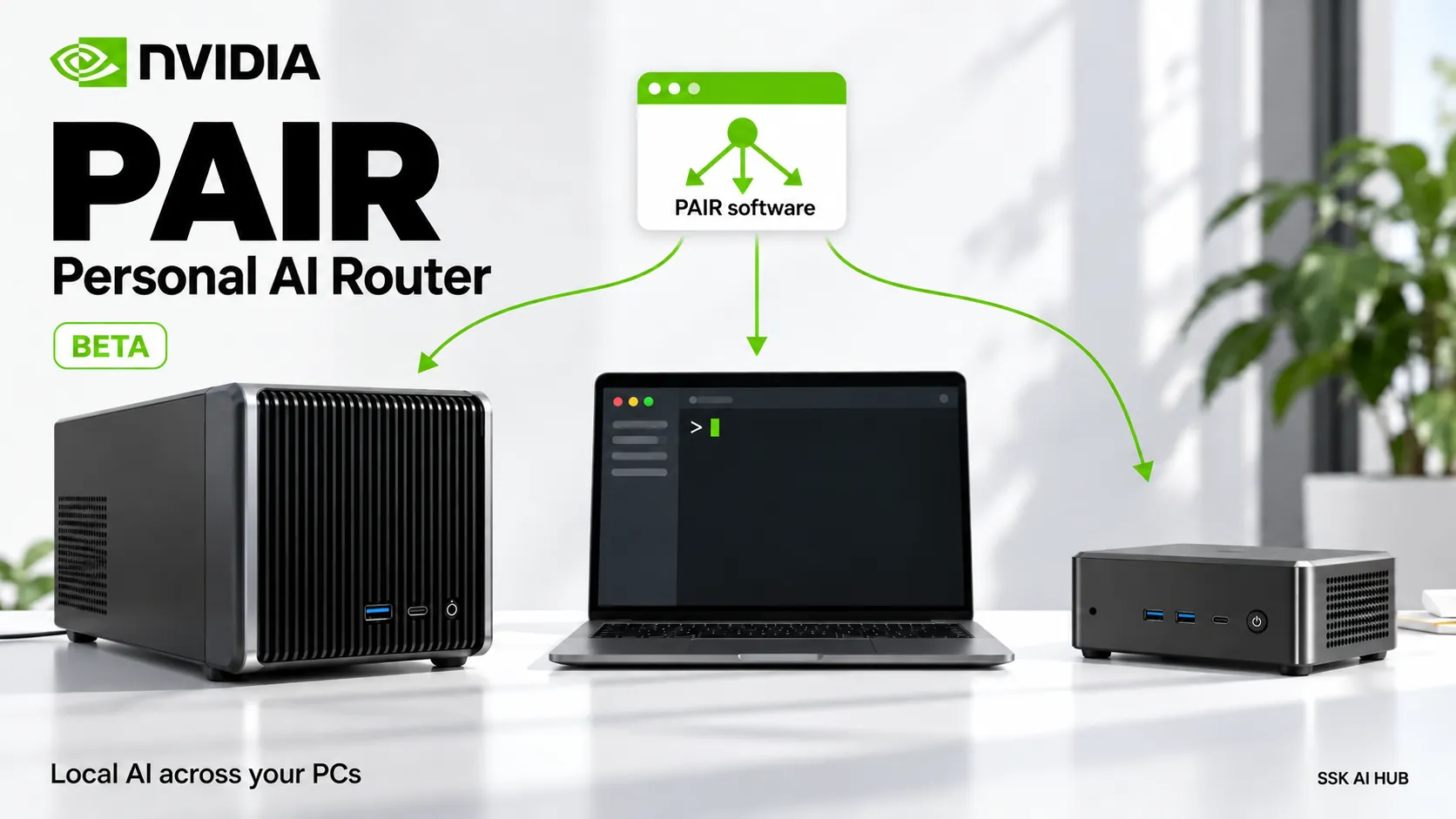
NVIDIA's September 3 IFA update introduced Personal AI Router, or PAIR, as free, open-source software in beta. It discovers compatible computers on a local network and routes independent inference requests to available capacity, with support for Ollama and LM Studio. This is request distribution, not a claim that it pools several computers' memory for one model. NVIDIA IFA announcement.
The announcement also covers inference optimizations, simplified local agent setup and RTX Spark Windows computers expected in October. NVIDIA's “up to 1.9×” llama.cpp throughput result is specifically tied to its RTX 5090 testing; it should not be generalized to all PCs. NVIDIA IFA announcement.
Why it matters — SSK AI Hub analysis
Some agent workloads contain independent jobs. Several document batches can be summarized separately, for example, before a later step combines the results. If every request waits behind one busy machine, spare capacity elsewhere could help.
The constraints still matter. Each machine needs a suitable model and enough memory for the requests it receives. The overall workflow also needs consistent settings, failure handling and a way to associate each response with the right input.
Practical Applications
Demonstrated / Stated applications
- Discovering compatible computers on a local network and routing independent inference requests to available capacity, with support for Ollama and LM Studio (NVIDIA's announcement; beta software)
Potential applications
- Independent document-extraction jobs distributed across a research group's compatible computers and compared against sequential processing on one machine — a proposed workflow, not a documented deployment
- Units of work that can be retried safely and tracked independently, including when one computer becomes unavailable
Practical example — a proposed workflow
A small research group has several compatible computers and a collection of public technical documents. It divides the collection into independent extraction jobs, each producing a structured record with document ID, claims and supporting passages.
The first comparison should be sequential processing on one machine versus distributed requests using the same extraction criteria. Measure the whole batch completion time, failed jobs and output consistency. Include a run where one computer becomes unavailable. Useful distribution needs to survive ordinary interruptions without silently dropping documents.
Developer Takeaway
Design around units of work that can be retried safely and tracked independently. Check software and hardware compatibility before estimating capacity. Keep “runs locally” and “never sends data outside the machine” as separate claims: an agent may still use external tools even when its model runs on local hardware.
Source attribution — Story 6 — NVIDIA PAIR and local AI updates (IFA)
Primary source: NVIDIA's IFA announcement. PAIR is beta software that routes independent requests; it is not described here as pooling several computers' memory for one model. The “up to 1.9×” llama.cpp throughput result is NVIDIA's figure tied specifically to its RTX 5090 testing and should not be generalized to all PCs. The inference optimizations and PAIR are available now; RTX Spark Windows computers are expected in October — a hardware plan, not current availability. Software and hardware compatibility should be checked before estimating capacity.
Story 7. WeatherNext 3: turn fresh observations into better decisions
What happened?
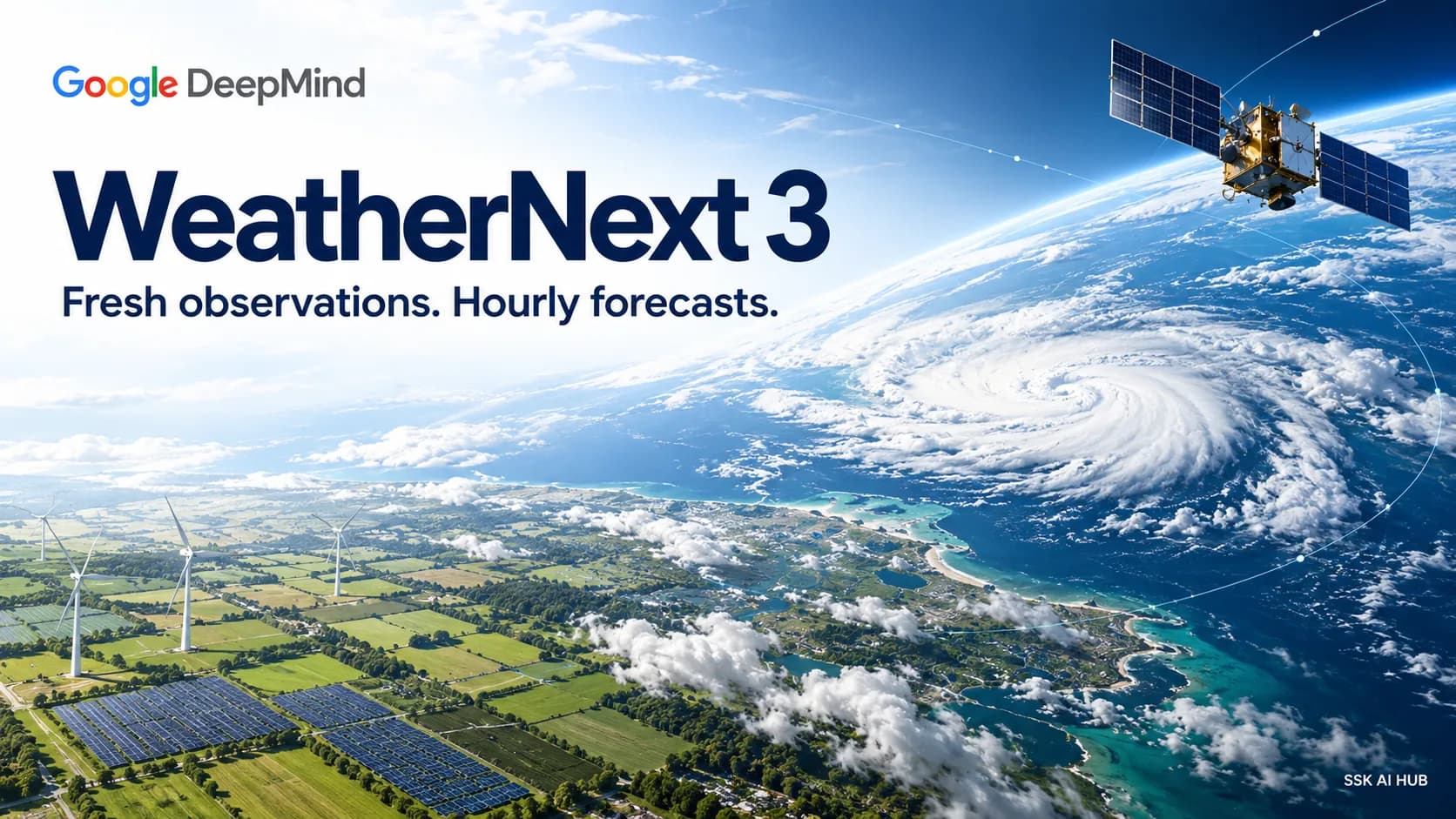
Google introduced WeatherNext 3 on September 3. The model uses live satellite observations and produces hourly forecasts. Its spatial resolution varies by output: key surface variables reach 5 km, other surface variables 10 km, and atmospheric variables 25 km. It is inaccurate to describe every output as 5 km. Google announcement.
The release includes variables relevant to renewable energy, such as turbine-height wind and solar radiation. Google announced forecast access through BigQuery, Earth Engine and Cloud Storage, with integration into several Google products beginning at launch. Google announcement.
Why it matters — SSK AI Hub analysis
A weather application becomes useful when it helps someone decide what to do, when to revisit that decision and what uncertainty remains. Greater detail on a map does not automatically establish that a proposed action is better.
The evaluation should therefore include the decision itself. For an outdoor activity, a false alarm may mean avoidable cancellation, while a missed event can cause disruption. A good interface helps users understand the trade-off without presenting a forecast as certainty.
Practical Applications
Demonstrated / Stated applications
- Hourly forecasts from live satellite observations; renewable-energy variables such as turbine-height wind and solar radiation; forecast access through BigQuery, Earth Engine and Cloud Storage (Google's announcement)
Potential applications
- An outdoor-event planning dashboard showing forecast issue time, valid time, the relevant variables and changes since the previous update, with user-set decision thresholds — a proposed workflow, not a documented deployment
- Decision evaluation that retains the forecast available at decision time and tracks missed disruptions and unnecessary changes separately
Practical example — a proposed workflow
An event organizer could build a planning dashboard for several outdoor locations. It would display forecast issue time, valid time, the relevant weather variables and changes since the previous update. Users could compare locations and set their own decision thresholds.
To assess it, retain the forecast that was available when each decision was made, then compare with later observations. Do not evaluate yesterday's decision using a forecast updated after the event. Track missed disruptions and unnecessary changes separately so the dashboard's apparent accuracy does not hide an expensive pattern of mistakes.
Developer Takeaway
Preserve issue time, valid time, units and location mapping with every prediction. Evaluate the variables and regions relevant to the application. Keep official alerts visible where safety is involved; this proposed planning workflow does not replace a national meteorological service's warnings.
Source attribution — Story 7 — Google DeepMind WeatherNext 3
Primary source: Google's announcement. Resolution is variable-specific — key surface variables 5 km, other surface variables 10 km, atmospheric variables 25 km — and it is inaccurate to describe every output as 5 km. Forecast access through BigQuery, Earth Engine and Cloud Storage, and integration into several Google products beginning at launch, are as announced by Google. The proposed planning workflow does not replace a national meteorological service's warnings.
Story 8. Meta Muse Spark 1.3: keep the requirement alive across a long task
What happened?
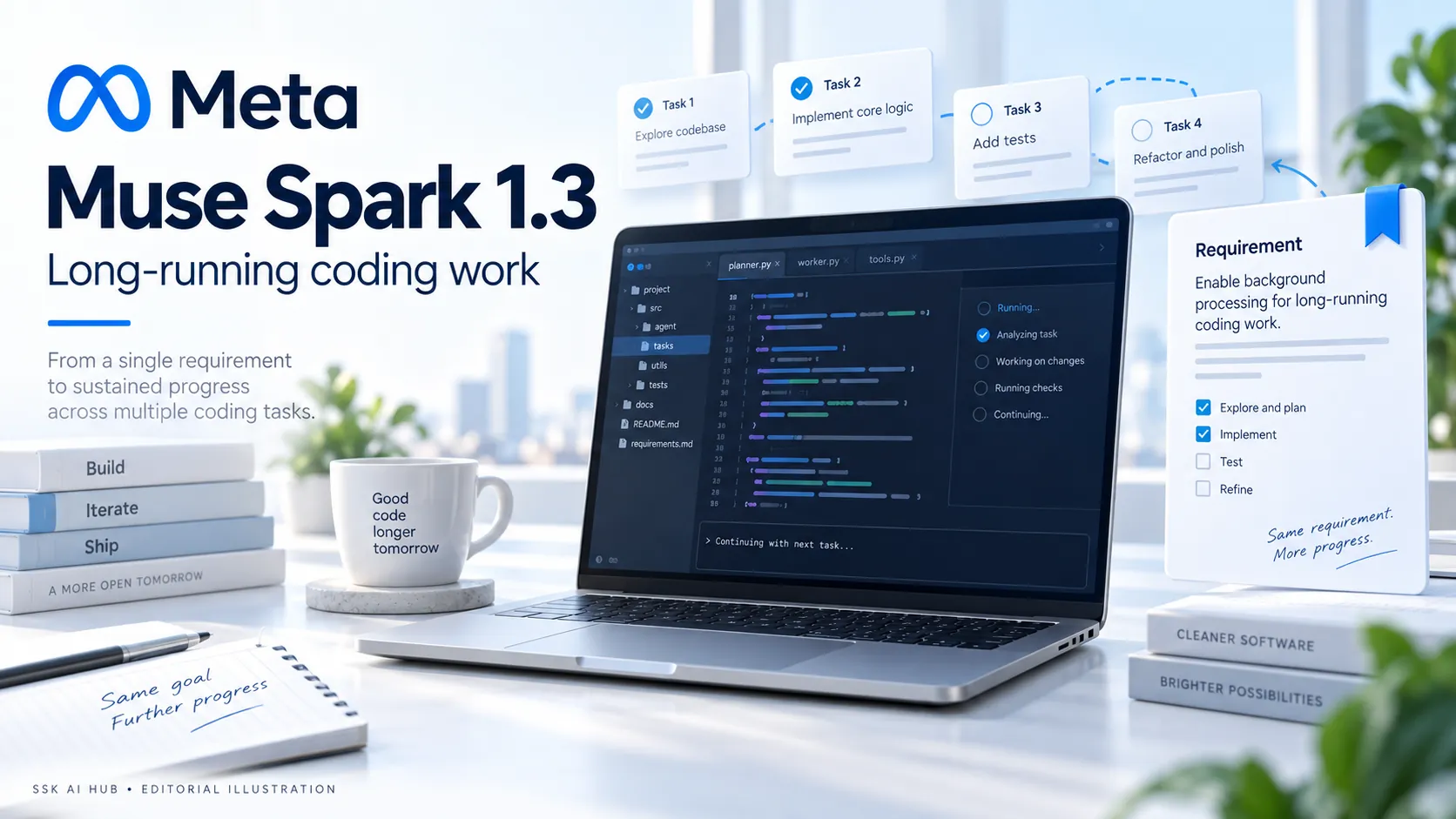
Meta released Muse Spark 1.3, including max reasoning access through Muse Code and Meta Model API. Meta emphasizes longer tasks, collaboration and retaining instructions through interruptions. Its efficiency comparisons are internal evaluations. The announcement describes an open-weights release as future work, so this launch should not be presented as an open-weights release. Meta announcement.
Why it matters — SSK AI Hub analysis
A coding assistant can finish a technically difficult change and still miss the user's actual goal. Perhaps it fixes a search feature but changes the URL format that existing links depend on. Perhaps it answers a follow-up and forgets the original task. These failures are worth measuring alongside whether the final code compiles.
The useful evaluation unit is a complete work session: initial instructions, corrections, interruptions and the final deliverable. A short benchmark prompt may not expose the same mistakes.
Practical Applications
Demonstrated / Stated applications
- Longer coding tasks, collaboration and retaining instructions through interruptions, with max reasoning access through Muse Code and the Meta Model API (Meta's announcement; efficiency comparisons are Meta's internal evaluations)
Potential applications
- A small website change with two standing requirements — preserve existing routes and keep the current logo — interrupted by an unrelated question before the task resumes — a proposed workflow, not a documented deployment
- Model comparisons on the same starting repository and acceptance checklist, recording repair time, dropped requirements and unnecessary file changes
Practical example — a proposed workflow
Give an agent a small website change with two requirements: preserve existing routes and keep the current logo. During implementation, ask it a separate question about one component, then return to the original task. Review whether the final diff still respects both requirements and whether the agent reports unfinished work honestly.
Compare models using the same starting repository and acceptance checklist. Record repair time, dropped requirements and unnecessary file changes. A fast first draft is less useful when the maintainer must reconstruct the original brief afterward.
Developer Takeaway
Keep a short, explicit list of acceptance criteria outside the conversation summary. Verify it against the finished change. Treat continuity as a behavior to test, not a guarantee inferred from a model name.
Source attribution — Story 8 — Meta Muse Spark 1.3
Primary source: Meta's announcement. Availability is through Muse Code and the Meta Model API, including max reasoning access. The efficiency comparisons are Meta's internal evaluations. The announcement describes an open-weights release as future work; this launch is not an open-weights release.
Story 9. Hugging Face WebGPU kernels: browser AI needs an execution layer
What happened?
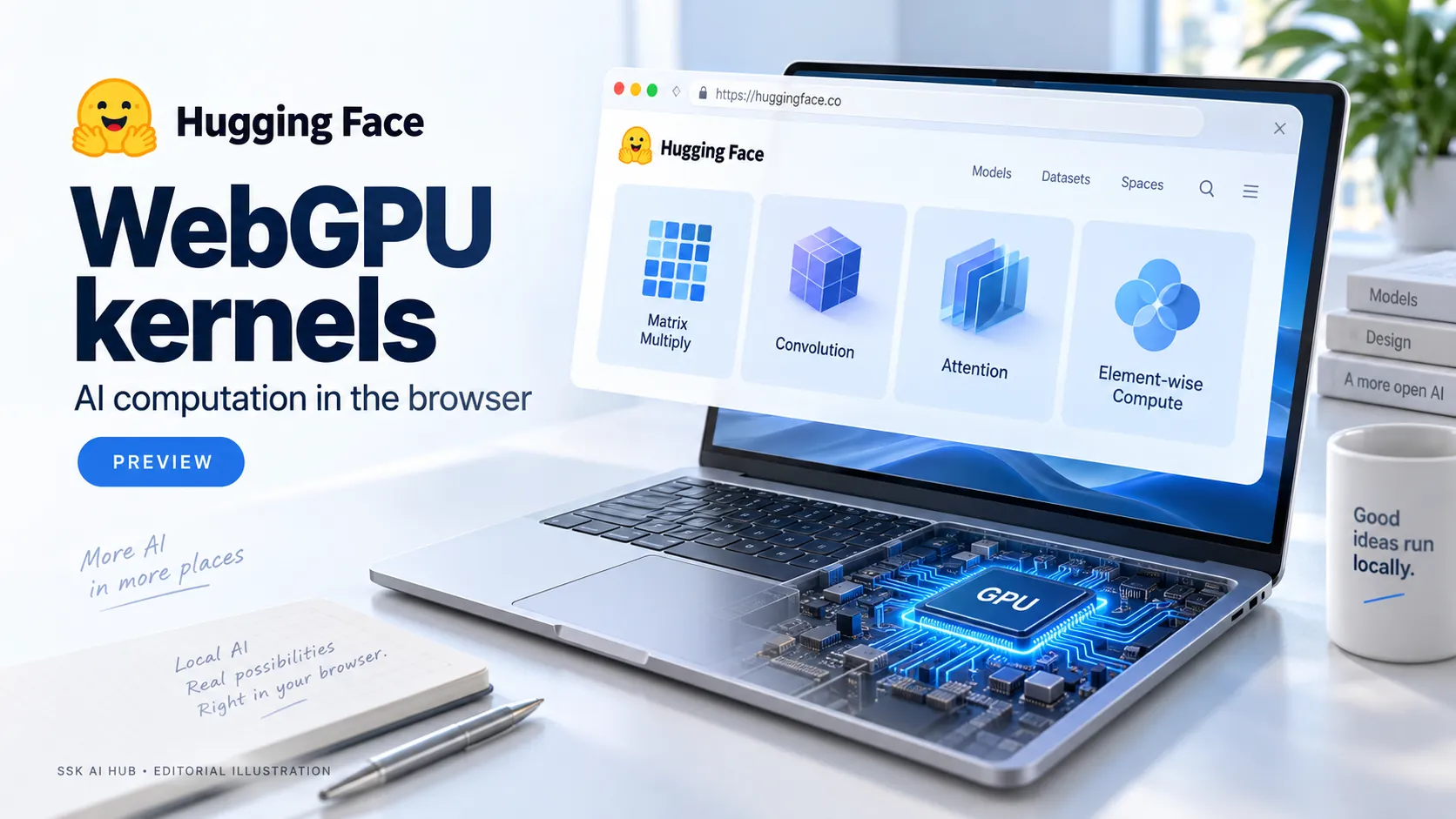
Hugging Face introduced a preview of WebGPU kernels, with a JavaScript loader and versioned compute kernels on the Hub. Its Fleet tooling tests performance across devices. The published comparisons measure GPU operations; they are not end-to-end application speedups. Browser, operating-system and GPU support still affect whether a workload can run. Hugging Face announcement.
Why it matters — SSK AI Hub analysis
Moving a model into a browser changes the engineering problem. Download size, initialization, memory limits and the user's hardware become part of the experience. A fast computation in isolation can still produce an application that feels slow on its first use.
Reusable low-level operations can reduce duplicated optimization work. The product question remains whether the complete local workflow is responsive and useful on the devices readers actually own.
Practical Applications
Demonstrated / Stated applications
- A JavaScript loader and versioned compute kernels on the Hub, with Fleet tooling that tests performance across devices (Hugging Face's announcement; a preview whose published comparisons measure GPU operations, not end-to-end application speedups)
Potential applications
- A small local document-labeling tool with a supported browser model, measured from opening the page to the first result on an older integrated-GPU laptop and a newer machine — a proposed workflow, not a documented deployment
- An honest unsupported-device state, and a visible server option chosen before any documents are uploaded
Practical example — a proposed workflow
Prototype a small local document-labeling tool with a supported browser model. Measure the time from opening the page to the first completed result, then measure later requests separately. Include one older integrated-GPU laptop as well as a newer machine.
Offer an honest unsupported-device state. If you provide a server option, make that a visible choice before uploading documents. Compare the whole experience, including model download and memory pressure, rather than reporting only the fastest kernel operation.
Developer Takeaway
Separate cold-start time, steady-state processing and transfer costs in your measurements. Local execution is a product capability to validate across a device range, not a universal replacement for hosted inference.
Source attribution — Story 9 — Hugging Face WebGPU kernels
Primary source: Hugging Face's announcement. WebGPU kernels are a preview. The published comparisons measure GPU operations, not end-to-end application speedups, and browser, operating-system and GPU support still affect whether a workload can run.
Story 10. Hugging Face funes: retrieve the reasoning behind an earlier change

What happened?
funes indexes coding-agent traces into a locally owned memory store. It supports several agents, including Claude Code and Codex, and retrieves original passages with session provenance. Embedding and reranking run locally; optional Hub synchronization is a separate feature. Its published comparison uses a small set of tasks, so the reported savings are not a general productivity estimate. Hugging Face introduction.
Why it matters — SSK AI Hub analysis
A repository records what changed, but the reasons for rejecting an approach often remain in an old conversation. When that context disappears, a new session may repeat the same investigation or reintroduce a discarded design.
Retrievable history can make handoffs more useful when it preserves the source of a decision. It also creates a new responsibility: an old conclusion must be checked against today's code and instructions.
Practical Applications
Demonstrated / Stated applications
- Indexing coding-agent traces into a locally owned memory store — supporting several agents including Claude Code and Codex — and retrieving original passages with session provenance, with embedding and reranking run locally (Hugging Face's introduction; optional Hub synchronization is a separate feature)
Potential applications
- Asking why a parser keeps an unusual fallback, retrieving the earlier discussion and checking it against the current parser and its test — a proposed workflow, not a documented deployment
- An evaluation on a small collection of real decisions, including one that has since been superseded
Practical example — a proposed workflow
Imagine an agent asks why a parser keeps an unusual fallback. Retrieve the earlier discussion, open the cited passage, and then inspect the current parser and its relevant test. The old exchange may explain a compatibility problem that a tidy refactor would accidentally restore.
Evaluate this with a small collection of real decisions. Include one that has since been superseded. A useful memory system should help the next session find evidence without treating every historical instruction as still binding. Review which traces belong in the store before enabling any optional synchronization.
Developer Takeaway
Retain provenance and distinguish a historical statement from a current requirement. Measure whether retrieval reduces repeated investigation while preserving correct decisions, rather than counting how many memories the system stores.
Source attribution — Story 10 — Hugging Face funes
Primary source: Hugging Face's introduction. Embedding and reranking run locally; optional Hub synchronization is a separate feature, and which traces belong in the store should be reviewed before enabling it. The published comparison uses a small set of tasks, so the reported savings are not a general productivity estimate. A historical statement is not a current requirement.
Story 11. GitHub Copilot: reviews, context controls and model migration
What happened?
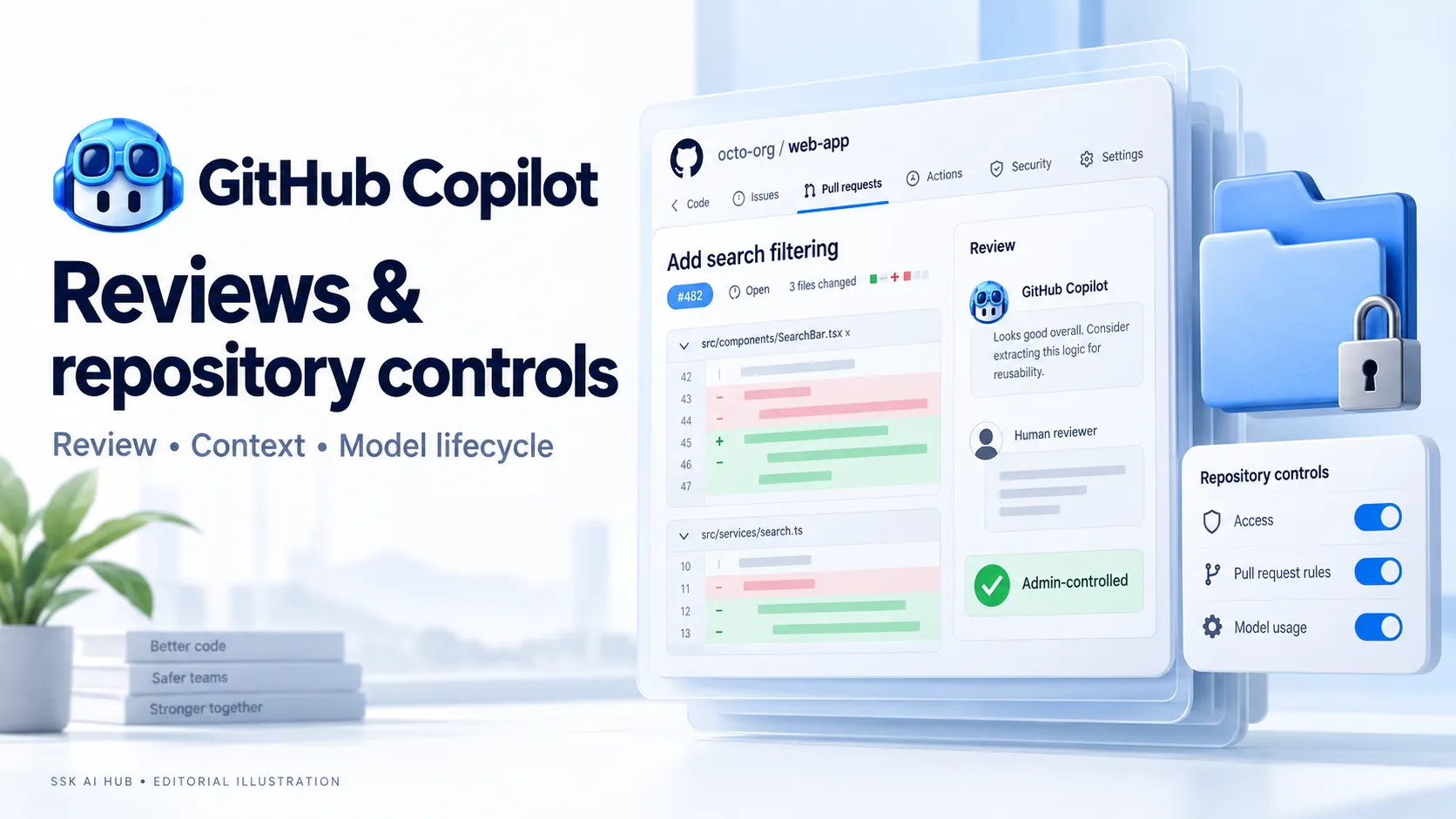
On September 1, GitHub introduced a public preview in which Copilot code review can approve pull requests. Actual approval is off by default and administrator-controlled; an enabled approval can count toward required approvals. An overview assessment alone does not satisfy that requirement. New commits dismiss the approval. GitHub review announcement.
On September 2, content exclusions became generally available in the Copilot app and CLI for Business and Enterprise customers. These controls govern which configured files can be used as Copilot context; they should not be described as a general filesystem security boundary. GitHub content-exclusion announcement.
On September 3, GitHub announced model retirements scheduled for October 2, with the following replacements. This is an advance migration notice, not a September removal. GitHub deprecation notice.
| Model scheduled for retirement | Recommended replacement in the notice |
|---|---|
| Gemini 3.5 Flash | Gemini 3.8 Flash |
| Gemini 3.6 Flash | Gemini 3.8 Flash |
| Kimi K2.7 Code | Kimi K3 |
| Claude Opus 4.7 | Claude Opus 5 |
Why it matters — SSK AI Hub analysis
These changes affect who can approve work, what information an assistant receives and whether a saved workflow will remain available. That makes them operational news even without a new headline model.
Practical Applications
Demonstrated / Stated applications
- Copilot code review approving pull requests (public preview, off by default, administrator-controlled; new commits dismiss the approval); content exclusions generally available in the Copilot app and CLI for Business and Enterprise; model retirements scheduled for October 2 with named replacements (GitHub's three changelog notices)
Potential applications
- Trying approval on a narrowly scoped repository path with a pull request that contains a deliberate behavior regression, to see whether tests and review catch it — a proposed workflow, not a documented deployment
- Verifying configured context exclusions with a harmless marker file, and rerunning a small acceptance set on each replacement model before the retirement date
Practical example — a proposed workflow
Try approval on a narrowly scoped repository path first. Use a pull request containing a deliberate behavior regression and check whether the existing tests and review process catch it. Separately, verify the team's configured context exclusions with a harmless marker file. Inventory pinned model choices before the retirement date and rerun a small acceptance set on each proposed replacement.
Developer Takeaway
Treat review configuration, context policy and model selection as separate settings. An AI approval should fit the repository's intended review process; it does not establish that a change is correct or that every other merge condition has passed.
Source attribution — Story 11 — GitHub Copilot: reviews, context controls and model migration
Primary sources: GitHub's three changelog notices. Copilot approval is a public preview, off by default and administrator-controlled; an enabled approval can count toward required approvals, an overview assessment alone does not, and new commits dismiss it. Content exclusions govern which configured files can be used as Copilot context — not a general filesystem security boundary. The model retirements are scheduled for October 2 — an advance migration notice, not a September removal.
Story 12. OpenAI: faster research raises the value of evidence and oversight
What happened?
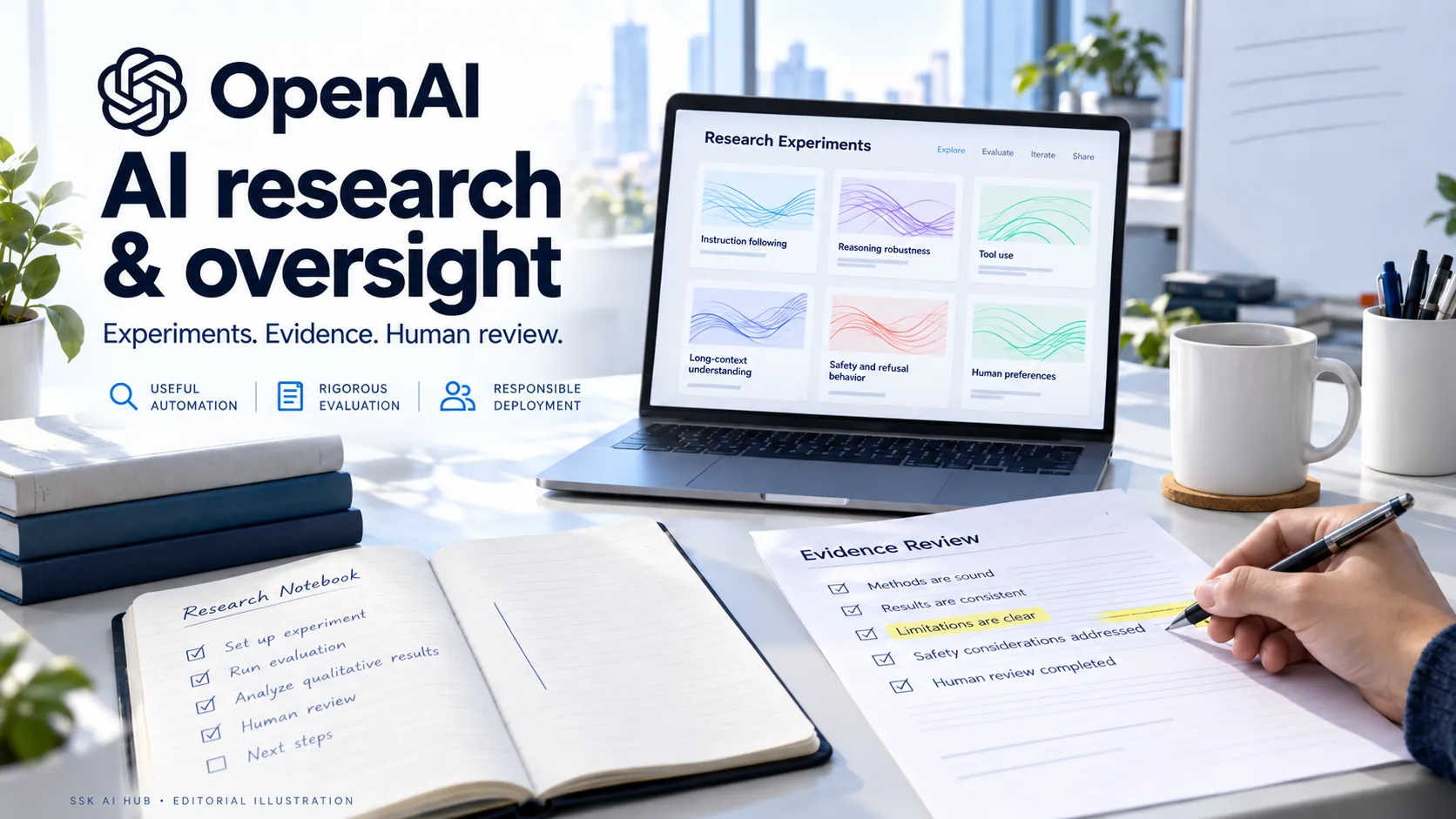
OpenAI reported reaching its internal automated research intern milestone: carrying out defined research tasks under human direction. Its measures show increasing agent use, while substantial human intervention remains. These are preliminary internal measurements, not an independent audit or proof of fully autonomous research. Aggregate agent runtime should not be read as a multiplier of scientific productivity. OpenAI research report.
In the same day's An Alien Mind essay, chief scientist Jakub Pachocki discusses alignment and the difficulty of monitoring increasingly capable systems. He argues for stronger safeguards and shared standards for pacing progress. This is an attributed assessment and proposal, not an industry-wide agreement or new binding rule. Pachocki's essay.
Why it matters — SSK AI Hub analysis
Automation can produce more experiments before a team has improved its ability to interpret them. A mistaken metric, contaminated evaluation set or unnoticed data-processing change can make a large volume of results misleading.
The practical question is where the human team's attention moves. If setup becomes easier, independent evaluation, experiment selection and clear records may become the work that most limits progress.
Practical Applications
Demonstrated / Stated applications
- Carrying out defined research tasks under human direction — OpenAI's internal “automated research intern” milestone, with increasing agent use and substantial human intervention (OpenAI's report; preliminary internal measurements, not an independent audit)
Potential applications
- An agent comparing two preprocessing choices on a small, permissioned dataset with the split and criteria fixed in advance, and a separate reviewer reproducing the result from the records — a proposed workflow, not a documented deployment
- A record of inputs, code version, random seeds and failed runs alongside every final table
Practical example — a proposed workflow
Ask an agent to compare two preprocessing choices on a small, permissioned dataset. Fix the data split and evaluation criteria before it begins. Require a record of inputs, code version, random seeds and failed runs alongside the final table.
Have a separate reviewer reproduce the chosen result from those records and inspect whether the claim survives on held-out examples. Record human correction time as well as compute use. Ten experiments with unresolved errors are not automatically more valuable than one trustworthy result.
Developer Takeaway
Define what evidence would justify the next decision before scaling the experiment queue. Keep the authority to change goals, accept conclusions or authorize consequential steps explicit.
Source attribution — Story 12 — OpenAI research acceleration report and “An Alien Mind”
Primary sources: OpenAI's research report and Jakub Pachocki's essay, both dated September 6. The milestone measures are preliminary internal measurements, not an independent audit or proof of fully autonomous research; aggregate agent runtime should not be read as a multiplier of scientific productivity. The essay is an attributed assessment and proposal, not an industry-wide agreement or new binding rule. OpenAI's previously announced research-environment restrictions are background to this coverage, not a new September event.
Story 13. TCS HyperVault: an AI campus plan is a capacity pipeline

What happened?
TCS's HyperVault and its partners announced plans for an AI data-center campus in Hyderabad, with proposed investment of up to ₹700 billion and capacity of up to 1 GW, according to Reuters' September 5 report on the company announcement. These are planned commitments, not already operational compute. Reuters report · TCS filing on BSE.
Why it matters — SSK AI Hub analysis
AI infrastructure news matters beyond the latest GPU specification. A usable service also depends on power, cooling, networking, operations and the commercial terms under which customers can obtain capacity.
Large campus announcements provide a view of investment intentions. They do not tell a developer when a particular accelerator, region or service will become available at a workable price. Keeping those questions separate makes the story useful without overstating delivery.
Practical Applications
Demonstrated / Stated applications
- Plans for an AI data-center campus in Hyderabad with proposed investment of up to ₹700 billion and capacity of up to 1 GW (the company announcement as reported by Reuters on September 5; planned commitments, not operational compute)
Potential applications
- A capacity worksheet for a future regional deployment — announced campus, construction stage, power availability, service launch date, supported workloads and actual customer access — a proposed workflow
- Building today around testable requirements — latency, throughput, data location and recovery behavior — and revisiting hosting choices as facilities and services become usable
Practical example — a proposed workflow
An Indian startup considering a future regional deployment could maintain a capacity worksheet: announced campus, construction stage, power availability, service launch date, supported workloads and actual customer access. Keep confirmed milestones separate from targets.
Build the application around requirements that can be tested today—latency, throughput, data location and recovery behavior. Revisit hosting choices as facilities and services become usable, rather than making a current launch depend on an unbuilt campus.
Developer Takeaway
Follow delivery milestones and customer-facing availability. Planned gigawatts describe a possible infrastructure envelope; they are not a directly usable measure of today's inference capacity.
Source attribution — Story 13 — TCS HyperVault campus plan
Sources: Reuters' September 5 report on the company announcement, and the TCS filing on BSE as indexed. The investment (up to ₹700 billion) and capacity (up to 1 GW) figures are planned commitments — not operational compute, completed construction, customer availability or verified sustainability outcomes. The business facts are attributed to the Reuters report read during research; the full BSE filing PDF could not be downloaded and is not described as inspected.
Also worth tracking
September 3
H Company's NeoMME for multimodal retrieval
H Company introduced NeoMME, a multilingual image-and-text encoder family with 260M and 800M variants. Its retriever supports dense and late-interaction embeddings, with Apache 2.0 checkpoints. This is retrieval infrastructure, not a conversational model. H Company technical introduction.
SSK AI Hub application idea: compare retrieval of table-heavy PDF pages against an OCR-only baseline. Measure whether the correct page reaches the answer stage before changing the answer-generating model. This is a focused experiment proposal, not a claim that NeoMME will win on every document collection.
September 7
UN human rights chief calls for stronger AI safeguards
In his Human Rights Council update, Volker Türk called for stronger safeguards around advanced AI, including independent verification and cooperation. This was a policy appeal, not a newly enacted regulation. Official September 7 speech, PDF.
SSK AI Hub reading: governance coverage belongs beside capability news because it concerns how powerful systems are evaluated and deployed. Follow concrete standards, commitments and implementation as they emerge; keep advocacy distinct from requirements that are already binding.
What connects the week
Our interpretation is that the most useful AI engineering work now lives at the boundary between a model's output and a task's acceptance criteria.
Computer work
For computer work, ask whether the deliverable is correct and reviewable.
Repeated agent calls
For repeated agent calls, measure all the usage required to get an accepted result.
Video
For video, require retrievable evidence.
Local execution
For local execution, follow every job through failures and retries.
Forecasting
For forecasting, preserve the information that was available at the time of the decision.
Remembered context
For remembered context, verify provenance and whether a decision still applies.
Research
For research, check the evidence behind the conclusion.
Infrastructure
For infrastructure, distinguish a plan from available service.
Transferable habits
These are transferable habits. They remain useful when the next model arrives and when the product names change.
What to watch in the next edition: whether longer agent workflows reduce human repair time on independently checked tasks; how actual cache use and reasoning effort change the bill for repeated work; whether video answers consistently point to the evidence that supports them; and which announced infrastructure changes become available and useful in practice. The next coverage window is September 8–14, 2026. This issue covers September 1–7 only; it is the first weekly edition of the month, not the September month-end newsletter.
One project concept from this issue
A proposed SSK AI Hub project concept, not an announced product or tested integration.
EvidenceClip
a lecture-video assistant that answers a narrow question and returns the exact supporting moments
- Problem
- A fluent video answer is only useful if a viewer can get back to the evidence and verify it. A timestamp by itself is not sufficient: it needs to point to a segment that actually supports the claim, and the system also has to handle questions whose answer never appears in the recording.
- From this issue
- Gemini agentic video understanding — question-directed search and inspection of selected segments through the Gemini API (story 4).
- How it works
- Build a lecture-video assistant that answers a narrow question and returns the exact supporting moments, keeping the first version focused on a few permissioned recordings. One recording and a question go in; candidate evidence windows come from a supported video-analysis model; the answer is a short explanation, timestamps and an explicit “not found” outcome when evidence is missing; the player opens at each cited segment so the reader can inspect it; and evaluation uses questions with known answers, events that occur between sampled frames, and questions with no answer.
- Who
- Students, teaching teams and builders working from a few permissioned lecture recordings.
- Why useful
- The interesting engineering work is the evidence contract: every substantive claim should point to a supporting segment. Record the model version, prompt, request settings, billed usage and output for each evaluation run, and compare an inexpensive configuration with a more thorough one on the same questions. A useful first result is a small working prototype and an honest error analysis — does it retrieve the wrong section, miss brief events, or treat an inference as something the speaker actually said? Those failures give you a concrete improvement plan and a stronger project story than a demo that only shows successful queries.
Short explanation + timestamps; the player opens at each cited segment for review
An explicit “not found” outcome — no claim without a supporting segment
- Evidence contract
- Citation correctness scored
- Proposed concept
INPUT
One recording and a question
RETRIEVAL
Request candidate evidence windows from a supported video-analysis model
ANSWER
Return a short explanation, timestamps and an explicit “not found” outcome when evidence is missing
REVIEW
Open the player at each cited segment so the reader can inspect it
EVALUATION
Use questions with known answers, events that occur between sampled frames, and questions with no answer
Sources & Verification
Story 1 — OpenAI GPT-6 Astra
Primary sources: OpenAI's launch announcement, its release index (which supplies the September 3 date) and the GPT-6 Astra system card. The 1.9× Mind2Web figure is OpenAI-reported for Astra combined with the updated Codex harness against its existing Sol experience — a model-and-harness benchmark result, not a promise for every workflow. The alignment findings, monitoring limitations and Critical cybersecurity classification are OpenAI's own assessments within its evaluation framework. Access began with a limited set of organizations and was announced as a staged rollout; GitHub's September 4 Copilot notice and Microsoft's Databricks Unity AI Gateway release notes are distribution updates to that launch, not separate model releases, and organization policies can still affect access. Product access can vary by account and surface; this edition does not offer a plan-by-plan eligibility guide.
Story 2 — Anthropic Claude Fable 5.1 and Mythos 5.1
Primary sources: Anthropic's model announcement and its newsroom, which supplies the September 1 date (the product page itself shows only September 2026). "Same model with different safeguards" is Anthropic's description; Fable is generally available while Mythos is limited to trusted access programs. Prices are Anthropic's published figures, and the roughly 25% and up-to-about-45% savings are Anthropic's estimates that depend on the workload's use of cached context. Enterprise Frontier Safeguards was announced with a phased rollout starting later in the fall — not evidence that every enterprise already has it. GitHub's September 1 Copilot notice: for Business and Enterprise the Fable policy is off by default; GitHub describes default Anthropic retention for safety classification without training use, and a time-limited zero-data-retention exception for eligible enterprises through the end of 2026 — access and retention settings need separate checks, and universal zero retention should not be assumed.
Story 3 — Google Gemini 3.8 Flash and 3.8 Flash Cyber
Primary source: Google's announcement. The introductory price ($0.75 and $3.75 per million input and output tokens, matching 3.7 Flash) is stated to end December 31, 2026, with $1.50 and $7.50 listed from January 1, 2027 — a temporary price, not a permanent budget line. The note that 3.8 may use more reasoning steps, tool calls and tokens on difficult tasks, particularly at higher effort, is Google's own statement. Flash Cyber is restricted to trusted defenders through the Fairwind Program. GitHub's September 3 Copilot notice describes a rollout across eligible individual and organizational plans; account availability and organization policy still apply.
Story 4 — Google agentic video understanding in Gemini
Primary source: Google's announcement. The reductions of up to 88% in tokens and 66% in analysis cost and the up to 7% better accuracy are Google-reported maxima across its cited benchmark testing — not expected savings for every clip, and not independently reproduced here. Launch support covers uploads and YouTube videos through the Gemini API on Gemini 3.7 Flash, 3.6 Flash and 3.5 Flash-Lite; broader consumer integrations were described as forthcoming.
Story 5 — NVIDIA's agreement to acquire Hugging Face
Primary source: NVIDIA's announcement, whose displayed date (September 3) takes precedence over adjacent archive and search date snippets. This is an announced agreement to acquire: this edition does not establish a completed closing, nor a delivered improvement to infrastructure, reliability, evaluation or deployment services. Continued support for different models, frameworks, clouds and accelerators, and NVIDIA compute not being required, are NVIDIA's stated intentions.
Story 6 — NVIDIA PAIR and local AI updates (IFA)
Primary source: NVIDIA's IFA announcement. PAIR is beta software that routes independent requests; it is not described here as pooling several computers' memory for one model. The “up to 1.9×” llama.cpp throughput result is NVIDIA's figure tied specifically to its RTX 5090 testing and should not be generalized to all PCs. The inference optimizations and PAIR are available now; RTX Spark Windows computers are expected in October — a hardware plan, not current availability. Software and hardware compatibility should be checked before estimating capacity.
Story 7 — Google DeepMind WeatherNext 3
Primary source: Google's announcement. Resolution is variable-specific — key surface variables 5 km, other surface variables 10 km, atmospheric variables 25 km — and it is inaccurate to describe every output as 5 km. Forecast access through BigQuery, Earth Engine and Cloud Storage, and integration into several Google products beginning at launch, are as announced by Google. The proposed planning workflow does not replace a national meteorological service's warnings.
Story 8 — Meta Muse Spark 1.3
Primary source: Meta's announcement. Availability is through Muse Code and the Meta Model API, including max reasoning access. The efficiency comparisons are Meta's internal evaluations. The announcement describes an open-weights release as future work; this launch is not an open-weights release.
Story 9 — Hugging Face WebGPU kernels
Primary source: Hugging Face's announcement. WebGPU kernels are a preview. The published comparisons measure GPU operations, not end-to-end application speedups, and browser, operating-system and GPU support still affect whether a workload can run.
Story 10 — Hugging Face funes
Primary source: Hugging Face's introduction. Embedding and reranking run locally; optional Hub synchronization is a separate feature, and which traces belong in the store should be reviewed before enabling it. The published comparison uses a small set of tasks, so the reported savings are not a general productivity estimate. A historical statement is not a current requirement.
Story 11 — GitHub Copilot: reviews, context controls and model migration
Primary sources: GitHub's three changelog notices. Copilot approval is a public preview, off by default and administrator-controlled; an enabled approval can count toward required approvals, an overview assessment alone does not, and new commits dismiss it. Content exclusions govern which configured files can be used as Copilot context — not a general filesystem security boundary. The model retirements are scheduled for October 2 — an advance migration notice, not a September removal.
Story 12 — OpenAI research acceleration report and “An Alien Mind”
Primary sources: OpenAI's research report and Jakub Pachocki's essay, both dated September 6. The milestone measures are preliminary internal measurements, not an independent audit or proof of fully autonomous research; aggregate agent runtime should not be read as a multiplier of scientific productivity. The essay is an attributed assessment and proposal, not an industry-wide agreement or new binding rule. OpenAI's previously announced research-environment restrictions are background to this coverage, not a new September event.
Story 13 — TCS HyperVault campus plan
Sources: Reuters' September 5 report on the company announcement, and the TCS filing on BSE as indexed. The investment (up to ₹700 billion) and capacity (up to 1 GW) figures are planned commitments — not operational compute, completed construction, customer availability or verified sustainability outcomes. The business facts are attributed to the Reuters report read during research; the full BSE filing PDF could not be downloaded and is not described as inspected.
Brief — H Company's NeoMME
Primary source: H Company's technical introduction, hosted on the Hugging Face blog. NeoMME is an H Company retrieval release — hosting on Hugging Face does not make Hugging Face its author. It is retrieval infrastructure, not a conversational model, and the application idea is a focused experiment proposal.
Brief — UN human rights chief's AI safeguards appeal
Primary source: the official September 7 speech (PDF). The remarks are a policy appeal, not a newly enacted regulation or a binding requirement.
Primary announcements are linked beside the relevant claims and collected above; the TCS business facts are attributed to Reuters' report, and the indexed BSE filing was not inspected in full. Performance figures remain attributed to their publishers; this edition does not claim independent replication or a hands-on test of the released models, APIs, kernels, memory tools, local inference stack or forecasting data. All example workflows are illustrative proposals, not documented customer deployments, and the EvidenceClip concept is an original editorial proposal. Selection follows significance and evidence across the whole September 1–7 window, without a fixed number of stories; no development outside September 1–7, 2026 is reported in this edition, which is September's first weekly edition rather than its month-end newsletter. Curated by Ravindra SSK Medicharla.
Get the next SSK AI Hub briefing directly on LinkedIn.
Subscribe on LinkedIn (opens in a new tab)