

SSK AI — What Changed in AI & What You Can Build | September 15, 2026
Vol. 1Weekly No. 6Covering September 8–14, 2026
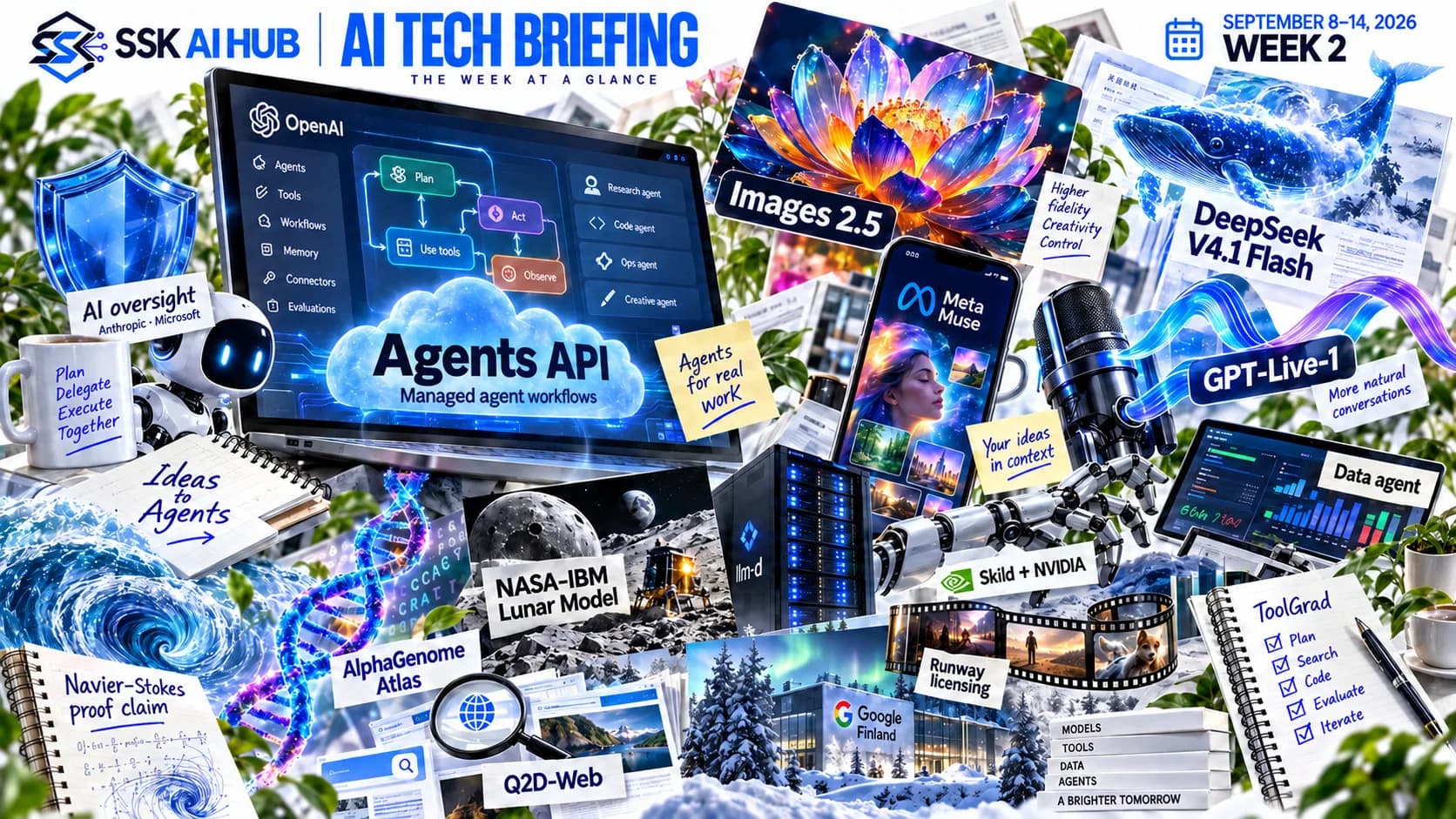
Three questions run through this week's fourteen developments: can the system do the work, what evidence backs its output, and who stays in control.
SSK AI
What Changed in AI & What You Can Build
Three questions run through this week: can it do the work, what's the evidence, and who stays in control.
- OpenAI's Agents API moves the agent runtime into a managed service
- ChatGPT Images 2.5 focuses attention on controlled visual production
- DeepSeek V4.1 Flash adds a new native visual model to the API
- GPT-Live-1 makes overlapping conversation an API design consideration
- Meta Muse brings personal agents and permission boundaries into focus
- ChatGPT's data and financial-services offerings center governed information
- An AI-assisted Navier–Stokes proof claim demands careful reading
- AlphaGenome Atlas makes predicted DNA-variant effects easier to explore
- The week's safety discussion moves from misuse to frontier oversight
- NASA and IBM extend foundation models to lunar remote sensing
- IBM's llm-d demonstration highlights serving efficiency on H100s
- Runway offers commercial model licensing for customization and self-hosting
- Skild and NVIDIA explain the infrastructure behind video-conditioned robotics
- Perplexity's Q2D-Web benchmark isolates search before generation
Sources for this edition were checked through September 14, 2026, 14:09 UTC; September 14 was still in progress at that cutoff.
The most useful way to read this week is through three questions: can an AI system complete useful work, what evidence supports its output, and who remains in control? Agent APIs, personal agents and live voice interfaces address the first question. Scientific models, a mathematical proof claim and retrieval research put the second under pressure. Enterprise permissions, misuse reporting and frontier oversight bring the third into focus.
This edition selects developments by significance, not by a fixed quota or a requirement to fill every date. It includes fourteen main stories and two shorter briefs. Product announcements, research claims, commercial offerings and policy proposals are labeled separately so they can be assessed on their own terms. All accompanying artwork is AI-generated editorial illustration.
This week's reading list
| Development | Announcement date | The question for builders |
|---|---|---|
| OpenAI Agents API | September 10 | Can the system complete the task within clear permissions? |
| ChatGPT Images 2.5 | September 8 | Does it preserve the evidence and details the work requires? |
| DeepSeek V4.1 Flash | September 10 | Does it preserve the evidence and details the work requires? |
| GPT-Live-1 | September 10 | Can the system complete the task within clear permissions? |
| Meta Muse | September 8 | Can the system complete the task within clear permissions? |
| ChatGPT data & financial-services tools | September 10 | Does it preserve the evidence and details the work requires? |
| Navier–Stokes proof claim | September 8–10 | What is predicted, what is measured and what is independently checked? |
| AlphaGenome Atlas | September 8 | What is predicted, what is measured and what is independently checked? |
| AI safeguards & oversight | September 10–14 | How do stated principles affect real deployment decisions? |
| NASA–IBM lunar model | September 10 | What is predicted, what is measured and what is independently checked? |
| IBM llm-d | September 8 | Which bottleneck or training problem is actually being addressed? |
| Runway model licensing | September 11 | Does it preserve the evidence and details the work requires? |
| Skild + NVIDIA | September 10 | Which bottleneck or training problem is actually being addressed? |
| Perplexity Q2D-Web | September 8–9 | What is predicted, what is measured and what is independently checked? |
| Google's Finland investment | September 9 | Which bottleneck or training problem is actually being addressed? |
| ToolGrad | September 10 | Which bottleneck or training problem is actually being addressed? |
Story 1. OpenAI's Agents API moves more of the agent runtime into a managed service
What changed
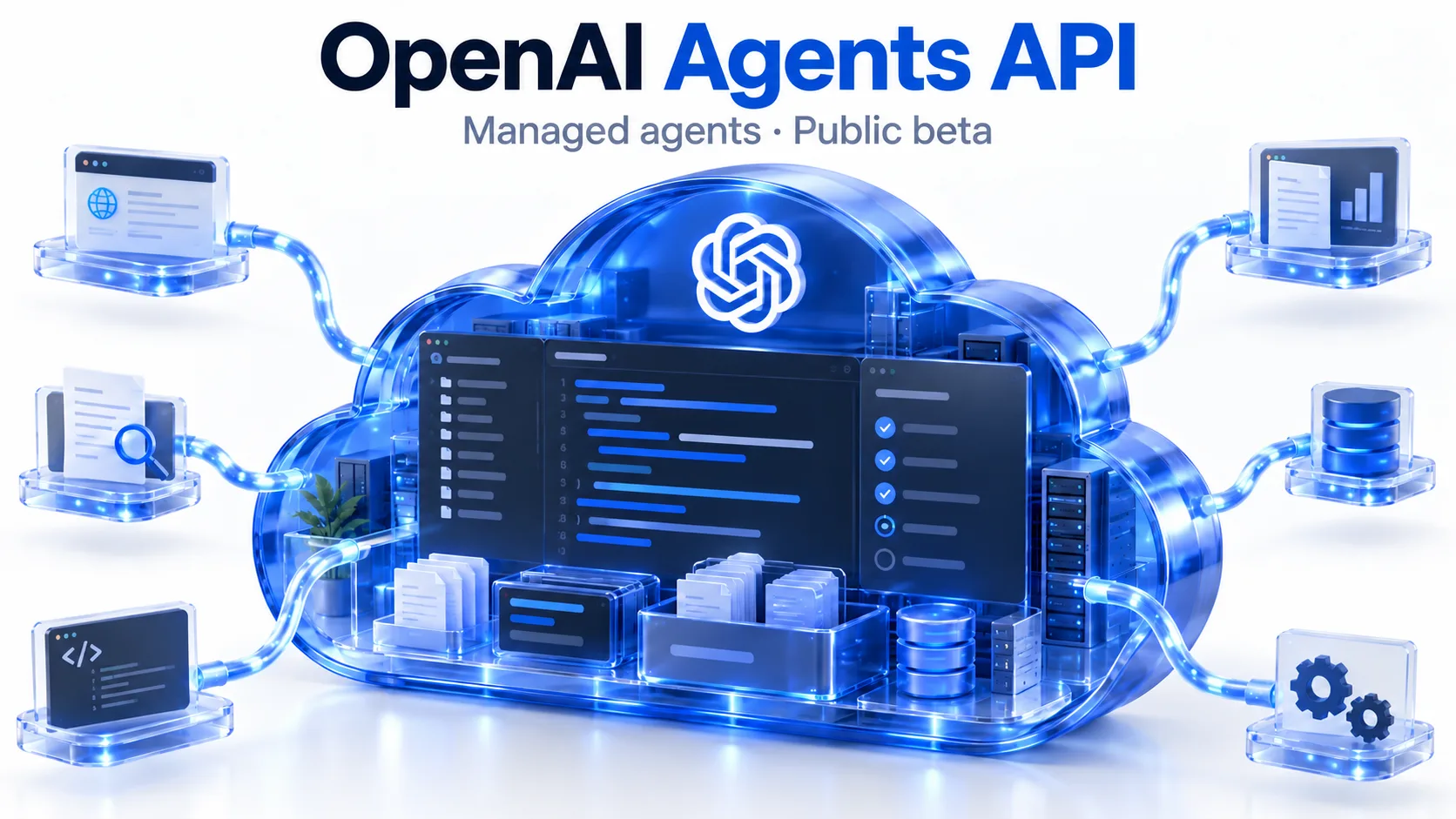
OpenAI introduced the Agents API in public beta. It combines an agent harness with context management, tool search and subagents, while allowing execution in OpenAI-hosted sandboxes, a developer's infrastructure or partner environments. Hosted execution has its own charges; a managed runtime does not make an entire agent task free. OpenAI announcement, developer announcement and billing context.
Why it matters
The integration question changes from "How do I write an agent loop?" to "Which responsibilities should my application keep?" Authentication, permissions, business rules and acceptable completion criteria still belong in the product design. A more capable runtime can reduce plumbing without resolving those decisions.
Practical Applications
Demonstrated / Stated applications
- A managed agent runtime combining a harness, context management, tool search and subagents, executable in OpenAI-hosted sandboxes, a developer's own infrastructure, or partner environments (OpenAI's announcement; public beta)
Potential applications
- A support assistant that investigates a failed delivery under a narrow permission set, with refund issuance held behind a separate confirmation step and audit trail
Practical example
Consider a support assistant that investigates a failed delivery. It could inspect approved records, draft a response and prepare a refund request. Start with a version that cannot issue refunds, then add a separate confirmation step and an audit trail. This makes success measurable before you give the workflow greater authority.
Developer Takeaway
Compare a small, fixed task set against your existing implementation. Record completion rate, human interventions, latency and total execution cost. Keep tool permissions narrow and make retries safe.
Source attribution — Story 1 — OpenAI Agents API
Primary sources: OpenAI's announcement and its developer-forum billing context. The Agents API is a public beta. Hosted execution carries its own charges — a managed runtime is not a claim that an entire agent task runs free.
Story 2. ChatGPT Images 2.5 focuses attention on controlled visual production

What changed
OpenAI announced ChatGPT Images 2.5, with Flare and Sunburst API models, emphasizing editing precision and reference fidelity. Its announcement also describes workflows involving sketches, templates and collaborative feedback. Availability depends on the surface and account rollout; the announcement is not evidence that every account immediately has identical access. OpenAI announcement.
Why it matters
For a publisher or design team, usefulness comes from preserving the elements that should stay stable while changing the subject. An attractive first image is only one part of the job. A dependable workflow also needs accurate text, consistent branding and revisions that do not disturb already approved details.
Practical Applications
Demonstrated / Stated applications
- Editing precision and reference fidelity, with workflows involving sketches, templates and collaborative feedback, through the Flare and Sunburst API models (OpenAI's announcement; account rollout varies)
Potential applications
- A weekly technology newsletter that keeps a fixed masthead and palette while supplying a different news brief each edition
Practical example
A weekly technology newsletter can keep a fixed masthead and palette, then supply a different news brief for each edition. Review the date, product spelling and visual claims separately from aesthetics. A beautiful image of a software service as a physical device would still communicate the wrong thing.
Developer Takeaway
Test reference preservation and targeted edits with your own assets. Store approved originals and inspect the actual output dimensions. Do not describe an image as 4K merely because the prompt requested 4K.
Source attribution — Story 2 — ChatGPT Images 2.5
Primary source: OpenAI's announcement. This is an announced rollout; availability depends on the surface and account, and the announcement is not evidence that every account immediately has identical access.
Story 3. DeepSeek V4.1 Flash adds a new native visual model to the API
What changed
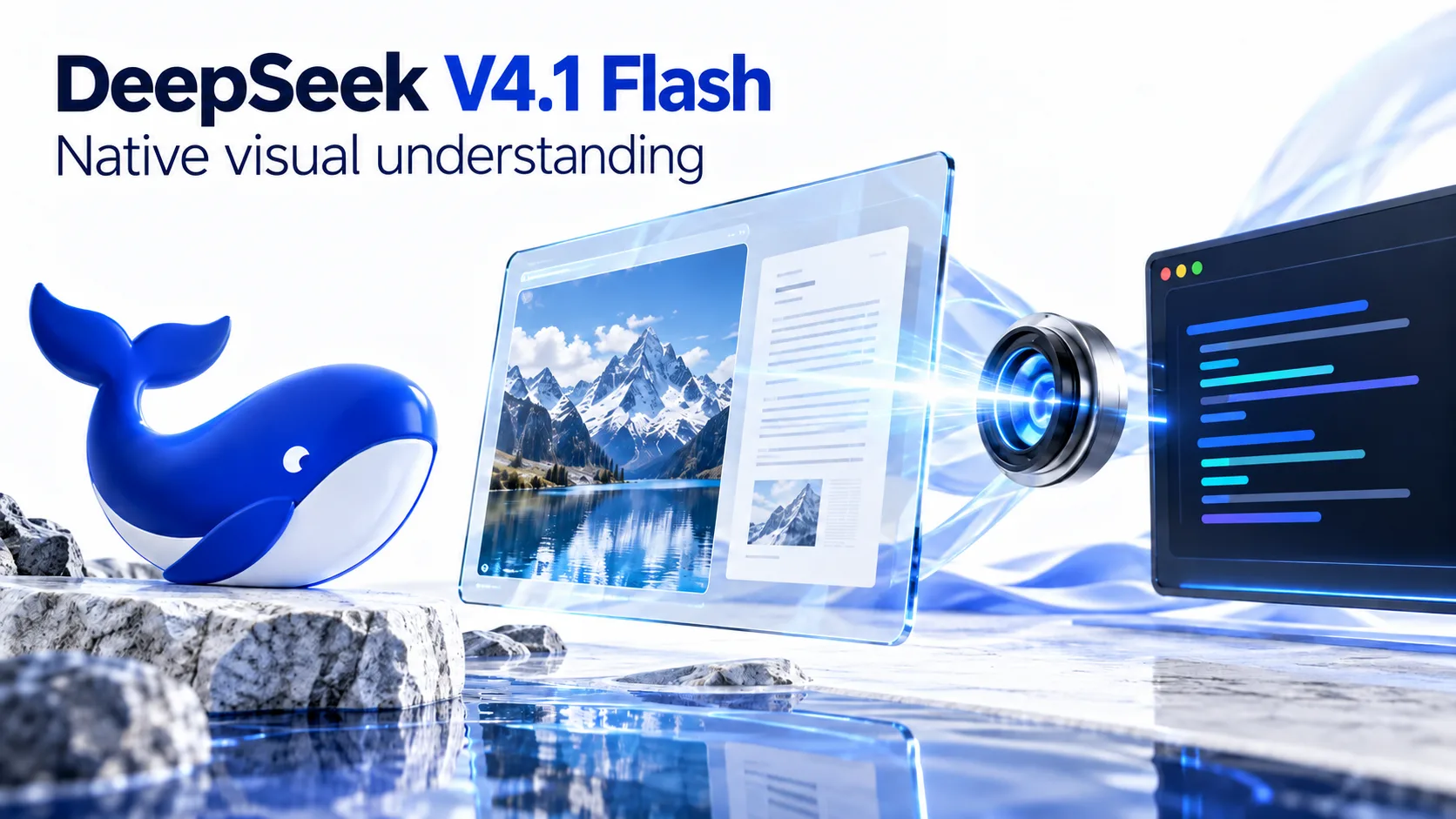
DeepSeek's dated API changelog introduces V4.1 Flash as a native visual multimodal model. The new identifier is `deepseek-flash`; the older `deepseek-v4-flash` and `deepseek-v4-flash-vision-exp` identifiers temporarily route to it. The same entry says the V4 Pro service continues beyond September 14 with unchanged billing — that continuation is not a separate September 14 model launch. Official dated API changelog.
Why it matters
A routing change can affect an application even when its own configuration file stays untouched. Visual capability broadens possible inputs, but migration quality still depends on the documents, screenshots and images your users actually submit. Provider benchmark claims are a starting point for evaluation, not a substitute for it.
Practical Applications
Demonstrated / Stated applications
- Native visual multimodal understanding through the API, with older Flash aliases rerouted to the new model (DeepSeek's dated API changelog)
Potential applications
- An invoice-review assistant tested against blurry scans, rotated pages, stamps and misleading totals before trusting the new routing
Practical example
For an invoice review assistant, build a sample containing blurry scans, rotated pages, stamps, small print and misleading totals. Compare extracted values with the original documents. Require the assistant to point to evidence and to acknowledge when an image is unreadable.
Developer Takeaway
Log the model actually served where the API exposes it, rerun representative evaluations, and check error handling before increasing traffic. Track image processing cost as part of the task.
Source attribution — Story 3 — DeepSeek V4.1 Flash
Primary source: DeepSeek's dated API changelog. Older Flash aliases (`deepseek-v4-flash`, `deepseek-v4-flash-vision-exp`) reroute to the new model. V4 Pro's continuation beyond September 14 is described in the same September 10 changelog entry — it is not a new September 14 launch.
Story 4. GPT-Live-1 makes overlapping conversation an API design consideration
What changed
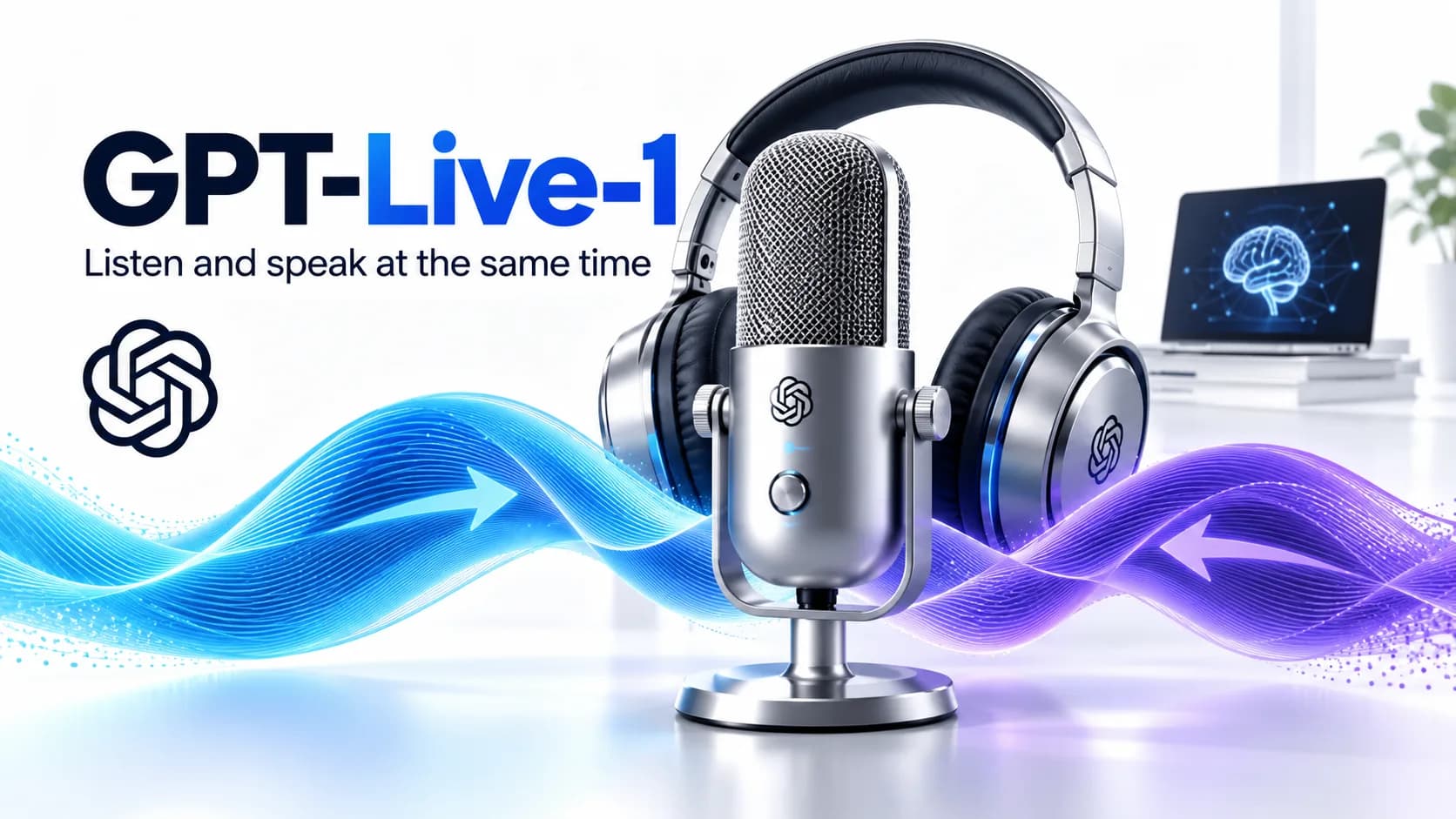
OpenAI introduced GPT-Live-1 for simultaneous listening and speaking. The voice front end can delegate reasoning and tool work to a backend model, including third-party models. OpenAI quotes $0.05 per minute for the voice front end; backend model and tool usage can add to the total. This is not an all-inclusive application price. OpenAI API announcement.
Why it matters
A voice agent needs more than fluent speech. It must handle interruption, corrections, silence and a speaker changing their mind. Separating conversational timing from deeper reasoning may help teams tune those responsibilities independently, but it also creates failure paths that need clear handling.
Practical Applications
Demonstrated / Stated applications
- Simultaneous listening and speaking through the API, with reasoning and tool work delegated to a separate backend model, including third-party ones (OpenAI's API announcement)
Potential applications
- A scheduling voice agent that drops an outdated request the moment a caller corrects themselves and confirms the final time before booking
Practical example
Imagine someone rescheduling a service visit: "Tuesday morning—actually, Thursday afternoon." The system should stop pursuing the old request, preserve the correction and confirm the final time before committing it. A polished voice cannot compensate for booking the wrong appointment.
Developer Takeaway
Test interruptions during both speech and tool execution. Measure time to stop speaking, state consistency, task completion and total cost per successful conversation. Include a clear handoff when the system cannot complete the request.
Source attribution — Story 4 — OpenAI GPT-Live-1
Primary source: OpenAI's API announcement. The quoted $0.05 per minute covers the voice front end only; backend model and tool usage add to the total, so it is not an all-inclusive application price.
Story 5. Meta Muse brings personal agents—and permission boundaries—into focus
What changed
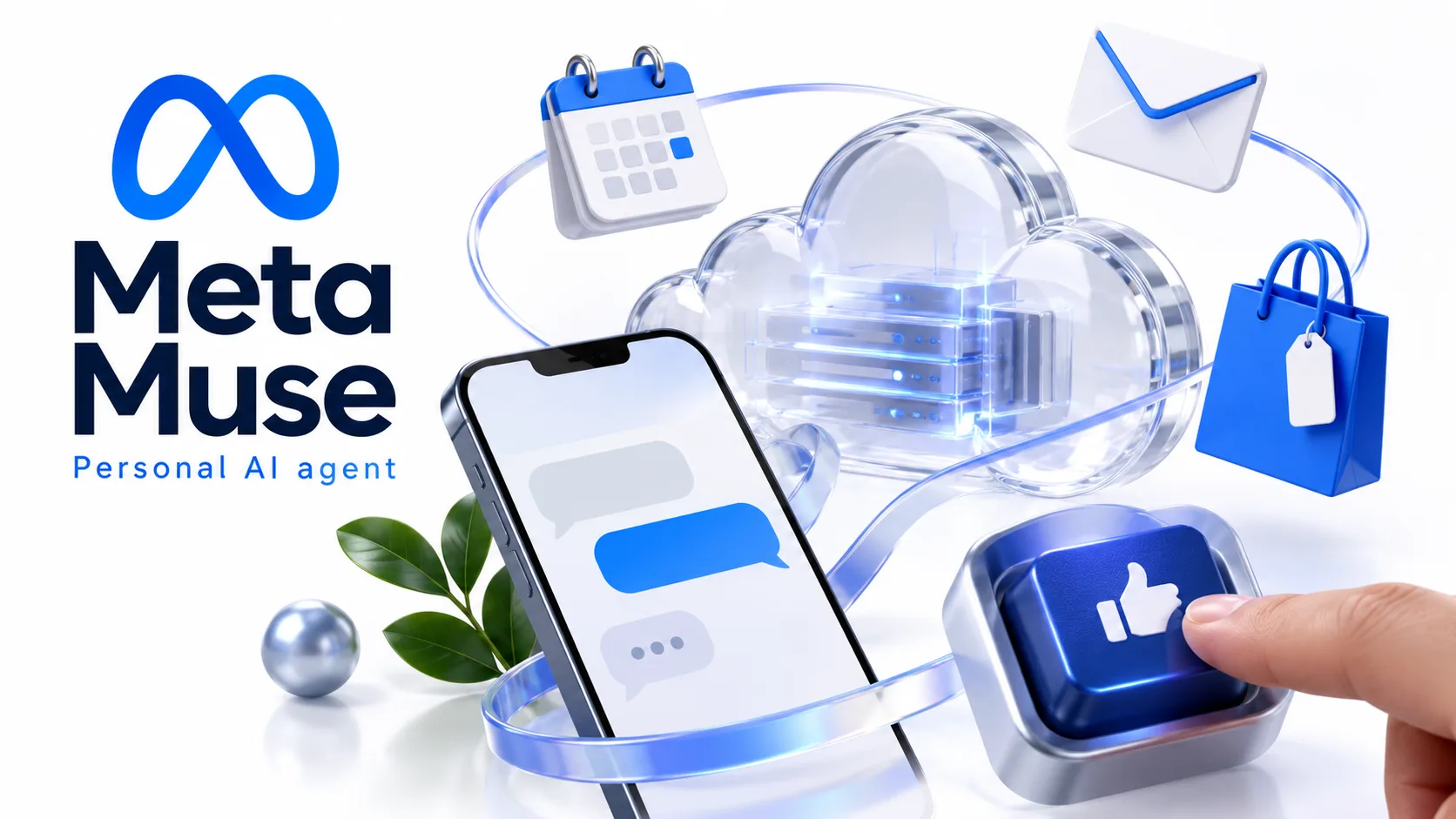
Meta introduced Muse, a personal AI agent using a dedicated SecureVM browser environment for work that can continue after the app closes. Meta describes approvals for consequential actions such as sending messages or purchases, with Sentinel enforcing permission boundaries. The architecture separates sensitive services from the agent runtime; that should not be paraphrased as an unconditional promise that no data ever leaves the environment. Meta product announcement, Meta security architecture.
Why it matters
Personal agents are useful when they can carry context across several steps, but a longer task also exposes more opportunities to misread a page or follow a malicious instruction. The quality of the approval request matters: users need to understand the actual action, recipient and information involved.
Practical Applications
Demonstrated / Stated applications
- A personal agent working in a dedicated browser environment, continuing tasks after the app closes, with approval gates for consequential actions enforced by Sentinel (Meta's product announcement and security architecture post)
Potential applications
- A travel assistant whose purchase approval shows the hotel, dates, full price and cancellation terms rather than a bare "Continue?" prompt
Practical example
A travel assistant might compare hotel options and prepare a reservation. The meaningful checkpoint is a summary of the hotel, dates, full price and cancellation terms before purchase. An approval that merely says "Continue?" gives the user too little information.
Developer Takeaway
Borrow the separation between proposing and committing actions in your own products. Treat web content as input rather than authority, and make it possible to inspect and cancel pending work.
Source attribution — Story 5 — Meta Muse
Primary sources: Meta's product announcement and its security-architecture post. The SecureVM/Sentinel separation of sensitive services from the agent runtime is Meta's description; it is not an unconditional promise that no data ever leaves the environment.
Story 6. ChatGPT's data and financial-services offerings put governed information at the center
What changed
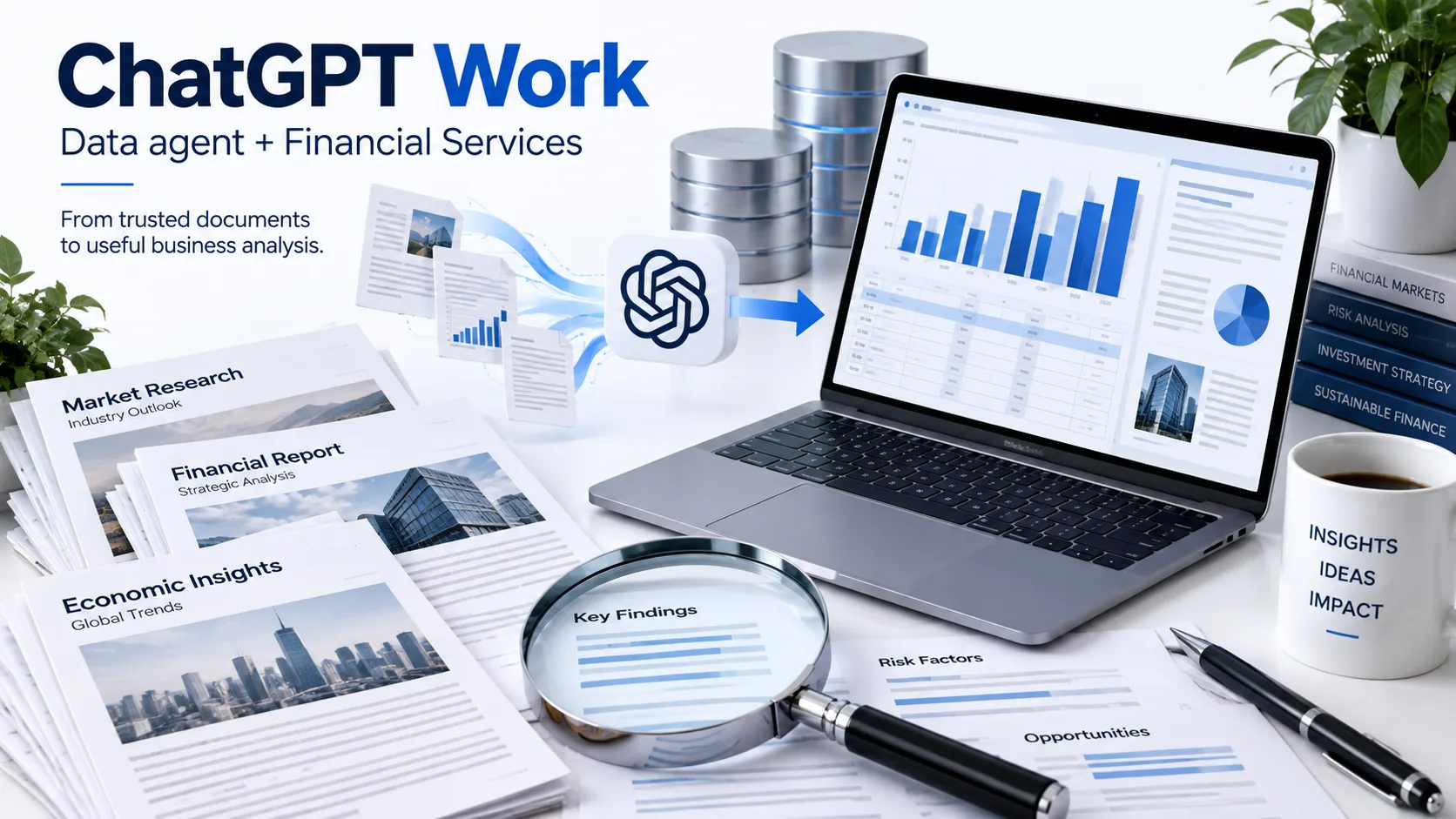
OpenAI announced a data agent for connected business information, including work with semantic definitions and source-system permissions. It also introduced ChatGPT Financial Services, a tailored offering with financial information providers and source traceability. These are related but distinct announcements; they should not be presented as universal access to premium financial data for every ChatGPT subscriber. OpenAI data-agent announcement, Financial Services announcement.
Why it matters
A convincing chart can be wrong because the underlying business definition is wrong. "Revenue," "active customer" and "renewal" often mean different things across teams. An assistant needs agreed definitions and authorized data access before its analysis can be trusted in a decision.
Practical Applications
Demonstrated / Stated applications
- A data agent working with connected business information under semantic definitions and source-system permissions; a financial-services offering with source traceability (OpenAI's two announcements; related but distinct offerings)
Potential applications
- A weekly sales report that states its reporting period, currency and refund treatment, then has a team member reproduce one figure from its cited source
Practical example
For a weekly sales report, require the agent to state the reporting period, currency, treatment of refunds and comparison baseline. Then ask another team member to reproduce a key figure from its cited source. This is a stronger check than asking whether the explanation sounds plausible.
Developer Takeaway
Start with a read-only workflow and a small set of approved metrics. Evaluate whether permissions remain effective through summaries, exports and follow-up questions. Financial outputs still need domain review; a citation is evidence to inspect, not a guarantee of correctness.
Source attribution — Story 6 — ChatGPT data agent & Financial Services
Primary sources: OpenAI's two announcements. The data agent and Financial Services are related but distinct offerings — neither should be presented as universal access to premium financial data for every ChatGPT subscriber.
Story 7. An AI-assisted Navier–Stokes proof claim demands careful mathematical reading
What changed
OpenAI published a proposed finite-time singularity result for forced Navier–Stokes equations, describing work by an internal model and a large coordinated agent effort. It released proof material and discussed Lean formalization. A September 10 update acknowledged relevant priority involving Alpoge and Buckmaster's forced Euler work. This briefing does not independently validate the proof or claim a Millennium Prize has been awarded. OpenAI research announcement and September 10 update.
Why it matters
The headline is striking, but the exact mathematical statement is essential. Assumptions, forcing conditions and the relationship to earlier results determine what has actually been established. Formal checking can strengthen confidence in a precisely encoded statement; experts still need to assess whether that statement supports the surrounding claims.
Practical Applications
Demonstrated / Stated applications
- A proposed finite-time singularity proof for forced Navier–Stokes equations, with released proof material and discussion of formal Lean verification (OpenAI's research announcement and September 10 update; not independently verified here)
Potential applications
- A three-column reading exercise tracking the theorem as stated, the formal or computational evidence supplied, and the independent expert assessment available
Practical example
A useful reading exercise is to make three columns: the theorem as stated, the computational or formal evidence supplied, and the independent expert assessment available. Keep a claim in the first column until the other evidence genuinely supports moving it further.
Developer Takeaway
When reporting AI research, distinguish discovery, proposed proof, formal verification and community acceptance. Avoid collapsing them into "AI solved mathematics." The same discipline applies to scientific model benchmarks and claimed breakthroughs outside mathematics.
Source attribution — Story 7 — OpenAI Navier–Stokes proof claim
Primary source: OpenAI's research announcement and its September 10 update. This is a proposed proof under scrutiny; the September 10 update credits relevant priority to Alpoge and Buckmaster's forced Euler work. This briefing does not independently validate the proof or claim a Millennium Prize has been awarded.
Story 8. AlphaGenome Atlas makes predicted DNA-variant effects easier to explore
What changed
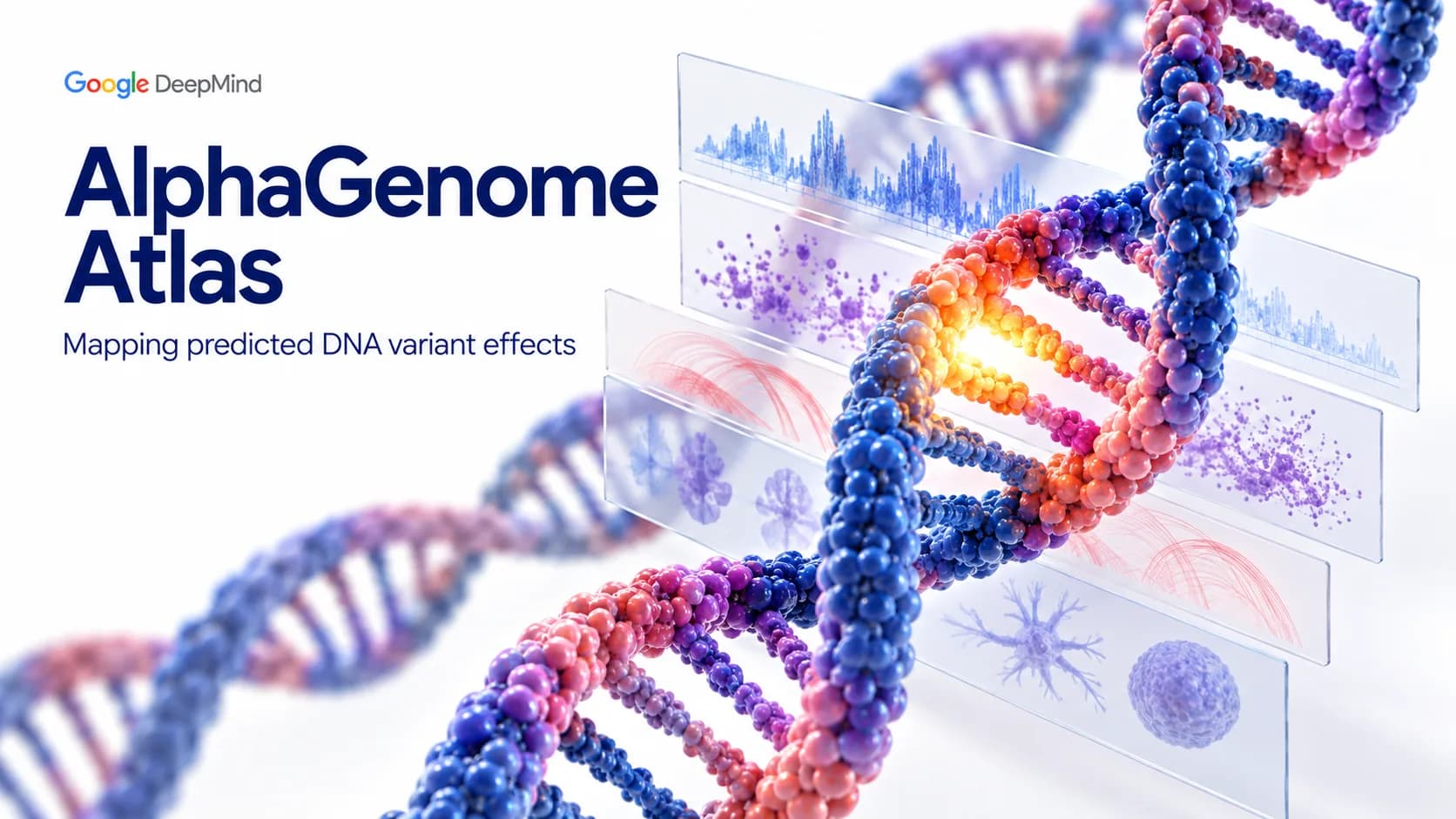
Google DeepMind introduced AlphaGenome Atlas, a resource containing predicted effects for roughly nine billion single-letter DNA variants. It includes an interface for exploring predictions and an AVI score intended to help prioritize investigation. These are model predictions, not experiments performed on every variant, and the resource should not be treated as an individual medical diagnosis. Google DeepMind announcement.
Why it matters
Precomputed results can make a research model useful to more people because they remove the need to run every inference themselves. The remaining challenge is interpretation: a large prediction table does not automatically explain which signals will hold up in a particular biological context.
Practical Applications
Demonstrated / Stated applications
- A precomputed, explorable atlas of predicted DNA-variant effects with an AVI prioritization score (Google DeepMind's announcement)
Potential applications
- A research team shortlisting variants for follow-up experiments, recording why each was selected and which measurement would support or reject the prediction
Practical example
A research team could use the atlas to shortlist variants for follow-up experiments, then record why each candidate was selected and which measurements would support or reject the prediction. That produces a testable research plan instead of a list of apparently authoritative scores.
Developer Takeaway
Keep predicted and experimentally measured data distinct in your interfaces and exports. Preserve provenance, uncertainty and model version. For learners, focus on how a model narrows a search space rather than assuming it replaces biological validation.
Source attribution — Story 8 — Google DeepMind AlphaGenome Atlas
Primary source: Google DeepMind's announcement. These are model predictions, not experiments performed on every variant; the resource should not be treated as an individual medical diagnosis.
Story 9. The week's safety discussion moves from observed misuse to frontier oversight

What changed
Anthropic's September 10 threat report describes investigated misuse from December 2025 through August 2026; those incidents did not all occur this week. Anthropic threat report, September 10.
September 12–13 — a call to pace frontier development
Over the weekend, Dario Amodei urged stronger evaluation and coordination around frontier development. Reuters corroborated the September 12 date, and weekend reaction coverage on September 13 supports that chronology. Amodei's essay, Reuters date corroboration, September 12, weekend reaction coverage, September 13.
September 14 — a draft code of conduct for consultation
Microsoft AI published a draft code of conduct for public consultation. This is a draft framework open for comment, not confirmation that every described behavior is already achieved. Microsoft AI draft, September 14.
Why it matters
The connection is accountability. A system that can do more useful work can also operate across more consequential contexts. Companies need ways to observe what their systems do, test boundaries and respond to failures. A published principle becomes more meaningful when outsiders can examine how it affects deployment decisions.
Practical Applications
Demonstrated / Stated applications
- A documented threat-intelligence investigation, a public pacing proposal, and a draft code of conduct opened for consultation (Anthropic, Dario Amodei and Microsoft AI's respective publications)
Potential applications
- A small team's written policy listing what an agent may access, what needs approval, what is logged and who can stop it, tested against a page containing conflicting instructions
Practical example
For a small team, translate broad principles into one concrete workflow. List what the agent may access, what requires approval, what is logged and who can stop it. Test whether the system respects those limits when a retrieved page contains conflicting instructions.
Developer Takeaway
Separate evidence about an incident from a vendor's interpretation of it. Treat forecasts as forecasts and proposals as proposals. Watch for independent evaluator access, measurable release conditions and documented enforcement rather than assuming that publication itself proves safety.
Source attribution — Story 9 — AI safeguards and frontier oversight
Primary sources: Anthropic's threat report (which covers an investigation period from December 2025 through August 2026, not incidents dated to this week), Dario Amodei's essay with Reuters' September 12 date corroboration and September 13 reaction coverage, and Microsoft AI's September 14 draft. These are three distinct kinds of evidence — a vendor investigation, a policy proposal, and a draft framework open for consultation — not an industry-wide agreement to halt development.
Story 10. NASA and IBM extend foundation models to lunar remote sensing
What changed
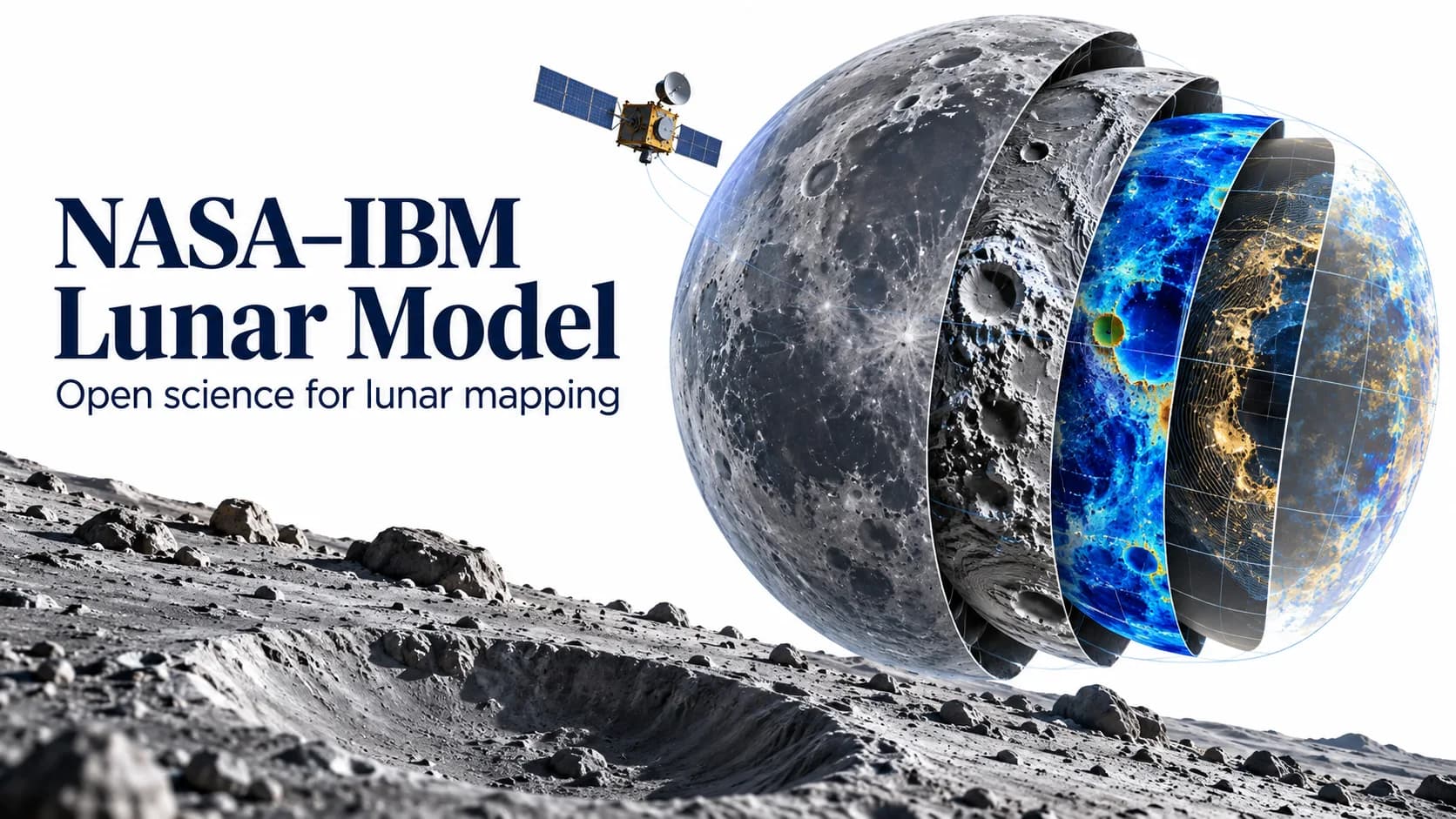
IBM Research announced a NASA–IBM lunar foundation model built for multimodal remote-sensing data from different missions and scales. Based on the TerraMind approach, the model is intended to support research on lunar features and related mapping tasks. Potential applications involving craters, volcanism or polar ice are research directions; the announcement does not establish a new discovery of lunar ice. IBM Research announcement.
Why it matters
Scientific data often arrives in formats that do not line up neatly. A shared representation can make it easier to combine observations and adapt to a downstream task, but the model must preserve the distinctions between what a sensor measured and what the model inferred.
Practical Applications
Demonstrated / Stated applications
- An open-source foundation model for multimodal lunar remote-sensing data across missions and scales, based on the TerraMind approach (IBM Research's announcement)
Potential applications
- A learning project comparing a simple baseline against the pretrained representation on a small, well-documented mapping task, split by geography to avoid leakage
Practical example
For a learning project, compare a simple baseline with a pretrained representation on a small, well-documented mapping task. Split the evaluation by geography or acquisition conditions so nearly identical regions do not appear in both training and testing.
Developer Takeaway
Read the model card before using the weights. Check input modalities, resolution, licensing and intended uses, then report limitations alongside results. A strong result on one mapping dataset is not evidence of universal scientific reliability.
Source attribution — Story 10 — NASA–IBM lunar foundation model
Primary source: IBM Research's announcement. This is an open-source research model release built on the TerraMind approach; craters, volcanism and polar-ice applications are research directions, not a claimed new discovery of lunar ice.
Story 11. IBM's llm-d demonstration highlights serving efficiency on H100 infrastructure
What changed
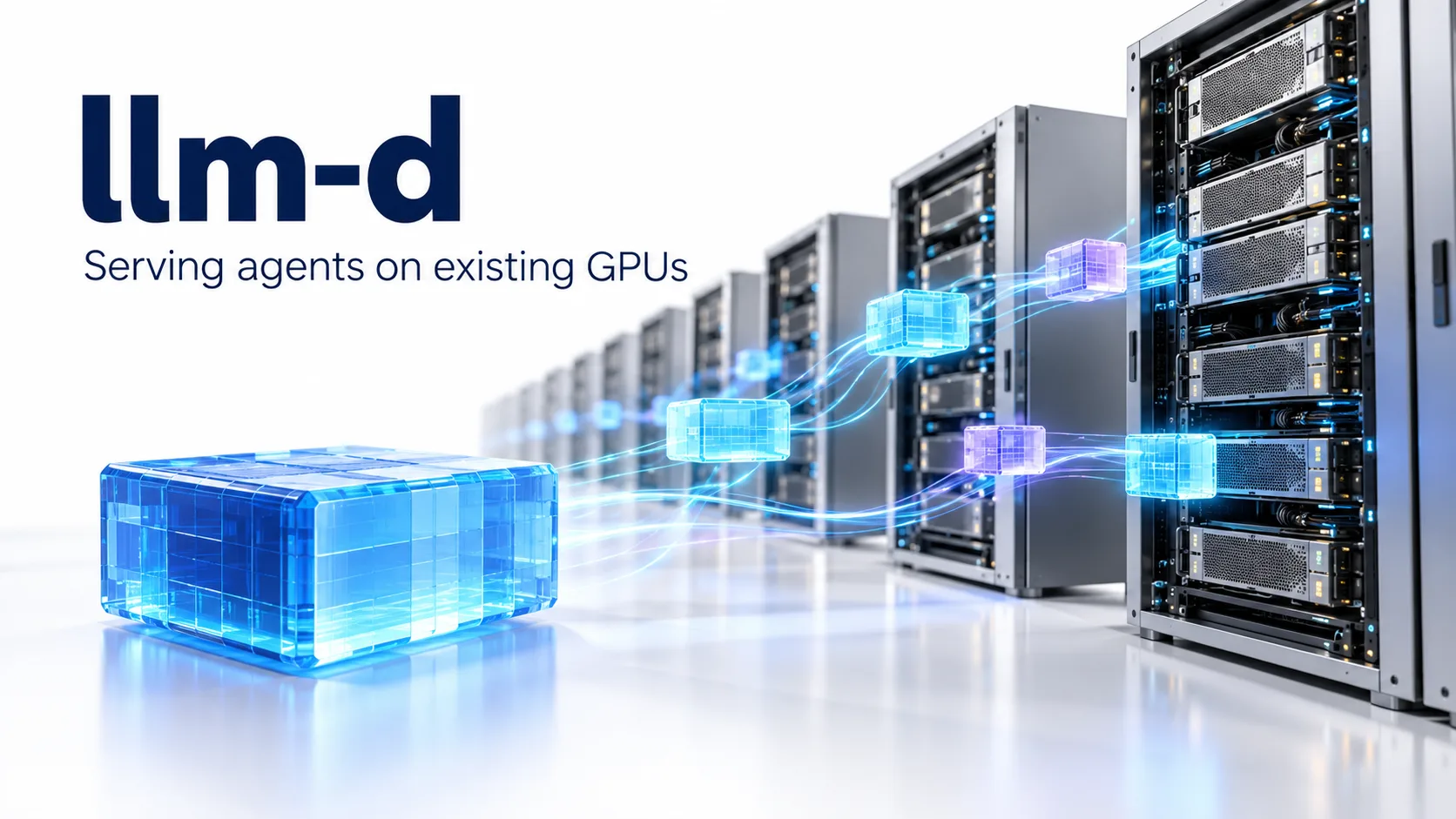
IBM reported an llm-d serving demonstration using 544 H100 GPUs with GLM-5.2, including a workload of up to 3,000 concurrent coding agents. The account emphasizes routing and key-value-cache reuse across the serving stack. Its throughput and cost comparisons describe a particular vendor-tested setup; they are not a guarantee for every model, workload or smaller deployment. IBM Research serving demonstration.
Why it matters
The useful lesson is that hardware specifications alone do not determine application economics. Repeated prefixes, queueing, memory use and request placement can influence how much useful work a cluster delivers. Serving architecture deserves attention alongside model selection.
Practical Applications
Demonstrated / Stated applications
- A large-cluster serving demonstration — 544 H100 GPUs, GLM-5.2, up to 3,000 concurrent coding agents — emphasizing routing and context reuse (IBM Research's serving demonstration; a vendor-tested setup)
Potential applications
- A team comparing cold requests against requests with reusable prefixes on their own traffic, measuring end-to-end latency and successful tasks per unit of compute
Practical example
A team with repeated repository context could compare cold requests against requests with reusable prefixes. Keep the task set, response limits and quality criteria constant, then measure end-to-end latency and successful tasks per unit of compute. A higher token rate is useful only if it helps the actual application.
Developer Takeaway
Do not extrapolate a large-cluster result directly to a laptop or a single GPU. Start with your own traffic pattern and identify whether the bottleneck is compute, memory, scheduling or an external tool.
Source attribution — Story 11 — IBM llm-d serving demonstration
Primary source: IBM Research's serving demonstration. Throughput and cost figures are vendor-reported for a specific workload and large cluster — not a guarantee for every model, workload or smaller deployment.
Story 12. Runway offers commercial model licensing for customization and self-hosting

What changed
Runway announced enterprise model licensing, offering a route to customize models with a company's own data and self-host them under an annual commercial agreement. Its licensing page describes the offering and research support. This is a commercial access arrangement, not an unrestricted public release of open-source model weights. Runway model-licensing terms and offering, official dated announcement.
Why it matters
Some organizations need more control over their creative workflow, infrastructure or domain specialization than a general hosted interface provides. Licensing may address those needs, but it also moves responsibilities for deployment, evaluation and operating cost toward the customer.
Practical Applications
Demonstrated / Stated applications
- Commercial model licensing for customization with a company's own data and self-hosting under an annual agreement (Runway's licensing page and announcement)
Potential applications
- A studio building a rights-cleared evaluation set to compare consistency, controllability, failure rate and artist revision time before committing to a house style
Practical example
A studio exploring a house visual style should first assemble a rights-cleared evaluation set. Compare consistency across scenes, controllability, failure rate and artist revision time. A model that looks impressive on a single clip may still be expensive to use across an entire production.
Developer Takeaway
Ask what the license permits, which artifacts can be retained, what updates are included and who operates the deployment. Compare total workflow cost with an API approach before assuming self-hosting is cheaper.
Source attribution — Story 12 — Runway model licensing
Primary sources: Runway's licensing page and its dated announcement. This is a commercial licensing arrangement — customization and self-hosting under an annual agreement — not an unrestricted public open-source release of model weights. September 11 is supported by the official announcement; the licensing page itself is undated.
Story 13. Skild and NVIDIA explain the infrastructure behind video-conditioned robotics
What changed
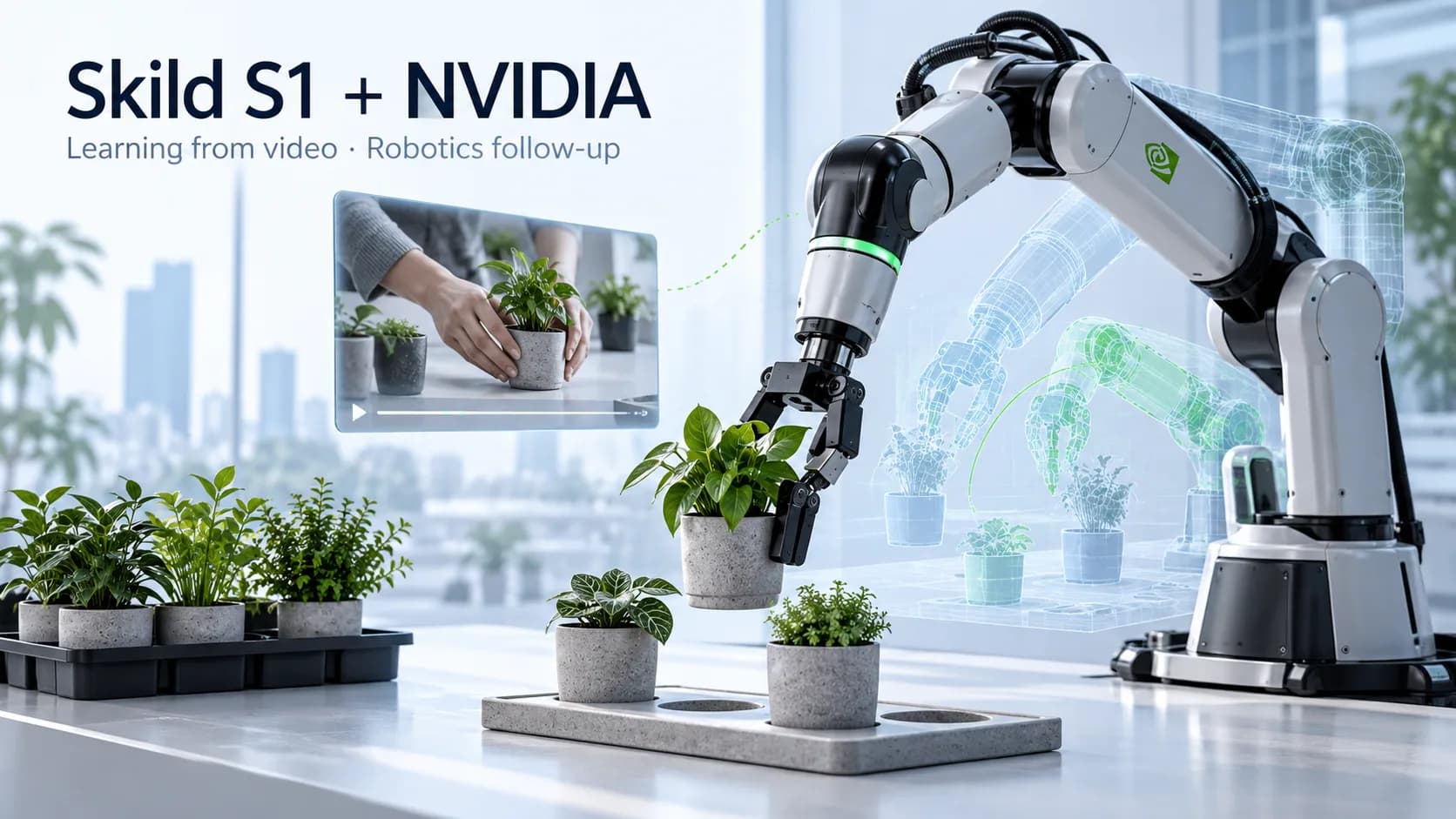
NVIDIA's September 10 account describes its collaboration with Skild AI around S1, including simulation, training and inference infrastructure and learning tasks from video demonstrations. The article explicitly says S1 launched the previous week. This item covers new technical detail during September 8–14; it does not relabel the original launch as a new event. NVIDIA technical account.
Why it matters
Video is an attractive source of task information because people already explain physical work through demonstrations. Real-world execution remains a separate challenge: camera angle, object properties, embodiment and small environmental changes can alter what a robot should do.
Practical Applications
Demonstrated / Stated applications
- Simulation, training and inference infrastructure supporting a robot learning tasks from video demonstrations (NVIDIA's technical account; S1 launched the prior week)
Potential applications
- A tabletop sorting evaluation across lighting, placement and unfamiliar containers, counting recovery from mistakes rather than only successful individual movements
Practical example
For a tabletop sorting task, evaluate the full job across changes in lighting, object placement and unfamiliar containers. Count recovery from mistakes and unsafe contacts, not just successful individual movements. A step-level metric does not automatically describe end-to-end task reliability.
Developer Takeaway
Keep vendor demonstration results attached to their test conditions. Ask what was held out, whether task-specific retraining was required and how the system behaves outside the demonstrated setting.
Source attribution — Story 13 — Skild AI S1 and NVIDIA
Primary source: NVIDIA's technical account, which explicitly states S1 launched the previous week. This item is included as this week's technical follow-up, not relabelled as a new launch.
Story 14. Perplexity's Q2D-Web benchmark isolates the search stage before generation
What changed
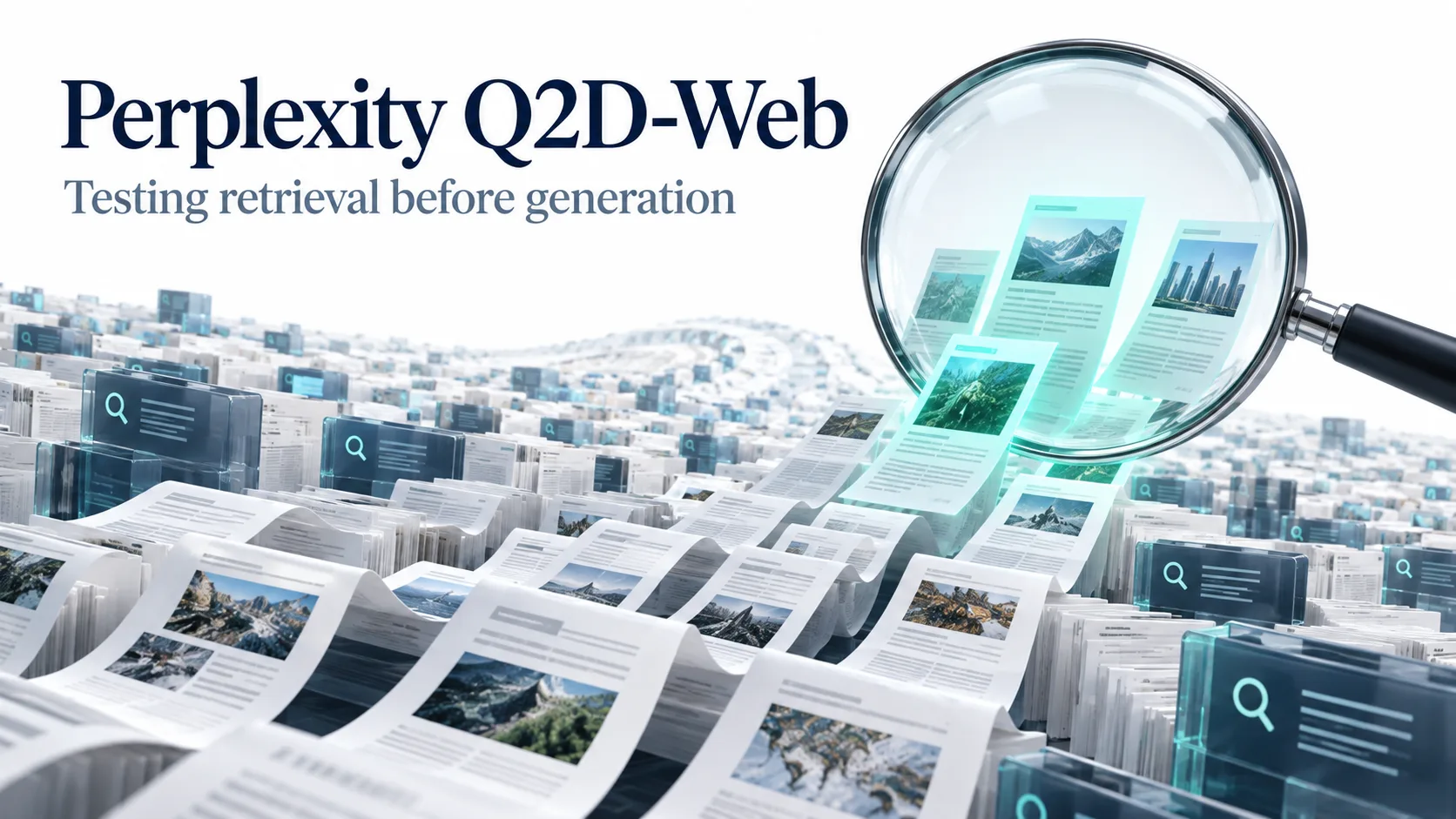
Q2D-Web evaluates first-stage retrieval using a large web corpus and agent-reformulated queries across ten languages. The paper reports approximately 190 million documents and 70,000 queries, with multiple relevance sets. Its focus is retrieval quality before later ranking and answer generation. A high score therefore does not establish that a complete search assistant produces accurate answers. Research paper, September 8, official announcement, September 9.
Why it matters
A fluent answer cannot repair evidence the search system never found. Separating retrieval evaluation from generation helps developers identify whether a failure comes from missing documents, weak ranking or unsupported synthesis.
Practical Applications
Demonstrated / Stated applications
- A large-scale first-stage retrieval benchmark with agent-reformulated queries across ten languages, roughly 190 million documents and 70,000 queries (Perplexity's research paper and community announcement)
Potential applications
- An internal knowledge-assistant test that checks whether known supporting documents reach the candidate set before separately evaluating the final answer
Practical example
For an internal knowledge assistant, create questions with known supporting documents and measure whether those documents appear in the initial candidate set. Then evaluate the final answer separately. Include outdated documents and closely related distractors to make the test realistic.
Developer Takeaway
Track retrieval recall and final answer faithfulness as different metrics. Inspect language coverage and query distribution before assuming a public benchmark represents your users. Do not assume the entire source corpus is freely redistributable merely because a paper and leaderboard are public.
Source attribution — Story 14 — Perplexity Q2D-Web
Primary sources: the research paper (September 8) and Perplexity's official community announcement (September 9). This benchmark measures first-stage retrieval only; a high score does not establish that a complete search assistant produces accurate final answers.
Two more developments worth tracking
September 9
Google announces a €13 billion commitment to Finland
Google announced plans to invest €13 billion over the next two years in Finland, including digital infrastructure and clean-energy-related partnerships. This is a forward investment commitment, not a statement that the full capacity is already operating. For readers tracking AI infrastructure, follow construction, grid access and commissioning milestones alongside the headline figure. Primary source.
September 10
Google explains ToolGrad's approach to generating tool-use training data
Google Research published an explanation of ToolGrad, which constructs a tool chain before generating the corresponding user query and uses textual feedback to improve examples. The post discusses research presented at ACL 2026; September 10 is the blog publication date, not necessarily the first release of the research. The practical lesson is to evaluate whether synthetic examples have valid, reproducible tool outcomes. Primary source.
What I would put into practice this week
Four practices carried into next week, drawn from this week's fourteen developments and two briefs.
Choose one complete workflow to evaluate
A fixed set of realistic tasks makes it easier to compare an API, a managed agent or an existing implementation fairly.
Keep evidence visible
Whether the output is a business chart, a retrieved answer or a research claim, readers should be able to find the supporting material and its limitations.
Make permissions understandable
Show the action and its consequences before asking for approval. Record what happened and provide a way to stop or recover work.
Measure the whole cost
Include model usage, execution, retrieval, hosting and human correction. A lower unit price can still produce a more expensive completed task.
Watch for independent evaluations of the week's research claims, actual account availability for newly announced products, migration effects from model aliases, and concrete implementation of the oversight proposals. Those developments will determine how much of this week's promise translates into dependable work. The next coverage window is September 15–21, 2026. This issue covers September 8–14 only; it is the second weekly edition of the month, not the month-end newsletter.
Sources & Verification
Story 1 — OpenAI Agents API
Primary sources: OpenAI's announcement and its developer-forum billing context. The Agents API is a public beta. Hosted execution carries its own charges — a managed runtime is not a claim that an entire agent task runs free.
Story 2 — ChatGPT Images 2.5
Primary source: OpenAI's announcement. This is an announced rollout; availability depends on the surface and account, and the announcement is not evidence that every account immediately has identical access.
Story 3 — DeepSeek V4.1 Flash
Primary source: DeepSeek's dated API changelog. Older Flash aliases (`deepseek-v4-flash`, `deepseek-v4-flash-vision-exp`) reroute to the new model. V4 Pro's continuation beyond September 14 is described in the same September 10 changelog entry — it is not a new September 14 launch.
Story 4 — OpenAI GPT-Live-1
Primary source: OpenAI's API announcement. The quoted $0.05 per minute covers the voice front end only; backend model and tool usage add to the total, so it is not an all-inclusive application price.
Story 5 — Meta Muse
Primary sources: Meta's product announcement and its security-architecture post. The SecureVM/Sentinel separation of sensitive services from the agent runtime is Meta's description; it is not an unconditional promise that no data ever leaves the environment.
Story 6 — ChatGPT data agent & Financial Services
Primary sources: OpenAI's two announcements. The data agent and Financial Services are related but distinct offerings — neither should be presented as universal access to premium financial data for every ChatGPT subscriber.
Story 7 — OpenAI Navier–Stokes proof claim
Primary source: OpenAI's research announcement and its September 10 update. This is a proposed proof under scrutiny; the September 10 update credits relevant priority to Alpoge and Buckmaster's forced Euler work. This briefing does not independently validate the proof or claim a Millennium Prize has been awarded.
Story 8 — Google DeepMind AlphaGenome Atlas
Primary source: Google DeepMind's announcement. These are model predictions, not experiments performed on every variant; the resource should not be treated as an individual medical diagnosis.
Story 9 — AI safeguards and frontier oversight
Primary sources: Anthropic's threat report (which covers an investigation period from December 2025 through August 2026, not incidents dated to this week), Dario Amodei's essay with Reuters' September 12 date corroboration and September 13 reaction coverage, and Microsoft AI's September 14 draft. These are three distinct kinds of evidence — a vendor investigation, a policy proposal, and a draft framework open for consultation — not an industry-wide agreement to halt development.
Story 10 — NASA–IBM lunar foundation model
Primary source: IBM Research's announcement. This is an open-source research model release built on the TerraMind approach; craters, volcanism and polar-ice applications are research directions, not a claimed new discovery of lunar ice.
Story 11 — IBM llm-d serving demonstration
Primary source: IBM Research's serving demonstration. Throughput and cost figures are vendor-reported for a specific workload and large cluster — not a guarantee for every model, workload or smaller deployment.
Story 12 — Runway model licensing
Primary sources: Runway's licensing page and its dated announcement. This is a commercial licensing arrangement — customization and self-hosting under an annual agreement — not an unrestricted public open-source release of model weights. September 11 is supported by the official announcement; the licensing page itself is undated.
Story 13 — Skild AI S1 and NVIDIA
Primary source: NVIDIA's technical account, which explicitly states S1 launched the previous week. This item is included as this week's technical follow-up, not relabelled as a new launch.
Story 14 — Perplexity Q2D-Web
Primary sources: the research paper (September 8) and Perplexity's official community announcement (September 9). This benchmark measures first-stage retrieval only; a high score does not establish that a complete search assistant produces accurate final answers.
Brief — Google's Finland investment commitment
Primary source: Google's announcement. This is a forward investment commitment over the next two years, not evidence that the capacity is already operating.
Brief — Google's ToolGrad explainer
Primary source: Google Research's blog post, explaining research presented at ACL 2026. September 10 is the explanatory blog's publication date, not the research's original release.
Primary announcements are linked beside the relevant claims and collected above. The examples and recommendations in this briefing are editorial analysis, not claims that SSK AI Hub has independently benchmarked every product; vendor-reported figures remain attributed to their publishers. Sources were checked through September 14, 2026, 14:09 UTC, while September 14 was still in progress. No development outside September 8–14, 2026 is reported in this edition, which is September's second weekly edition rather than its month-end newsletter. Curated by Ravindra SSK Medicharla.
Get the next SSK AI Hub briefing directly on LinkedIn.
Subscribe on LinkedIn (opens in a new tab)